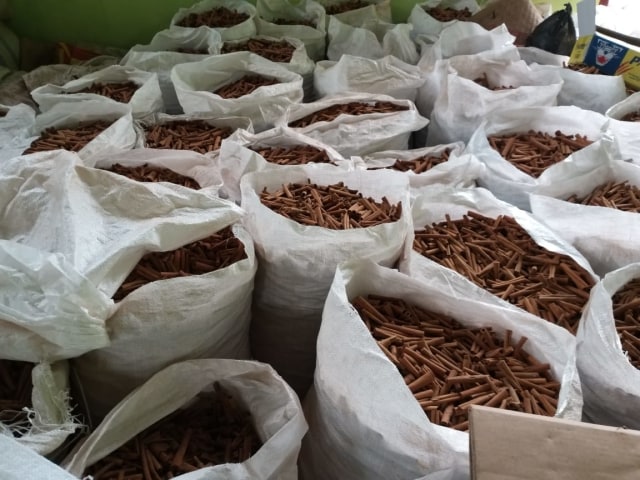
Central Sumatra, Indonesia – Kerinci Regency, located in Jambi Province, is known as one of Indonesia’s main producers of cinnamon. Contributing around 80% of the country’s total cinnamon supply, this region plays an important role in sustaining Indonesia’s spice industry. At the heart of this success is Tani Sakti Alam Kerinci Farmer Organization (TAKTIK), which continues to inspire farmers to innovate and embrace sustainable practices.
According to Madral, Chairman of TAKTIK, the organization has long been committed to improving the welfare of local cinnamon farmers. “We continue to encourage farmers to innovate and be competitive in the global market,” he said.
In 2016, TAKTIK achieved a major milestone when it successfully obtained Geographical Indication (GI) certification for Kerinci cinnamon, an official recognition facilitated by the Jambi Provincial Plantation Office. This was followed by an award from the Indonesian Ministry of Agriculture in 2019, further cementing their reputation as a model farmer organization.
Since 2013, TAKTIK has been collaborating with Rikolto Indonesia and supported by the Aliansi Petani Indonesia (API) (Indonesian Peasant Alliance) in providing capacity-building assistance to farmers, from the regional to national levels. Through the APFP-FO4A program, TAKTIK has implemented various initiatives including:
- Organizational and financial management training
- Leadership regeneration programs
- Organic farming practices
- Business development
- Farmer field schools
“API, as our umbrella organization, regularly conducts meetings, financial and administrative trainings, and business incubation programs aimed at helping farmers compete in the global market,” Madral added.


While cinnamon trees take up to eight years to mature for harvest, TAKTIK helps farmers make the most of their land in the meantime. The organization actively promotes intercropping and organic farming, allowing farmers to plant short-term crops like chili and ginger between cinnamon trees.
“Traditionally, cinnamon has been viewed as a long-term investment for farmers,” explained Madral. “If daily income isn’t enough, they can rely on cinnamon, which is harvested after eight years. In the meantime, they can cultivate other crops to earn regular income.”
Beyond economic benefits, this approach also promotes environmental sustainability. The organization encourages farmers, especially young farmers, to obtain organic and fair-trade certifications to enhance the market value and recognition of their products.
In 2022, TAKTIK successfully exported cinnamon bark three times to Tripper (Europe), which processes the bark into powder and supplies it to Verstegen Spices, a major retailer that markets to Europe and the United States. The group’s cinnamon products are already certified organic under both European Union and USDA standards, verified by the International Certification Institute, Control Union.
Looking ahead, TAKTIK aims to transform its communities into recognized organic villages, where all agricultural products, from cinnamon to vegetables, are organically grown and certified. “We’re working with local government to promote field schools, composting houses, and livestock integration. Our goal is for every village to be known for its organic cinnamon and sustainable farming practices,” Madral said with optimism.
The APFP-FO4A program is implemented by the Asian Farmers’ Association for Sustainable Rural Development (AFA) and La Via Campesina (LVC), with funding support from the European Union (EU) and the International Fund for Agricultural Development (IFAD). The program aims to strengthen the capacities of farmers’ organizations to provide economic services, advocate for enabling policies, and promote sustainable livelihoods for small-scale family farmers across Asia.