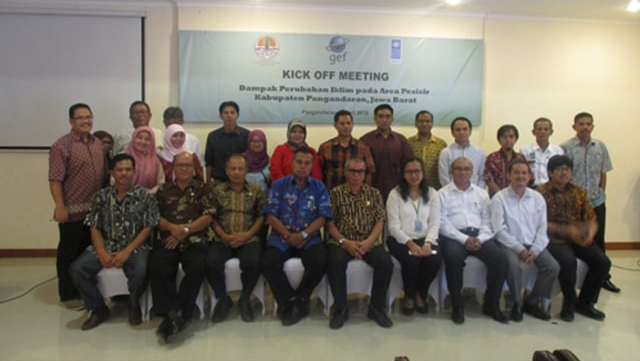
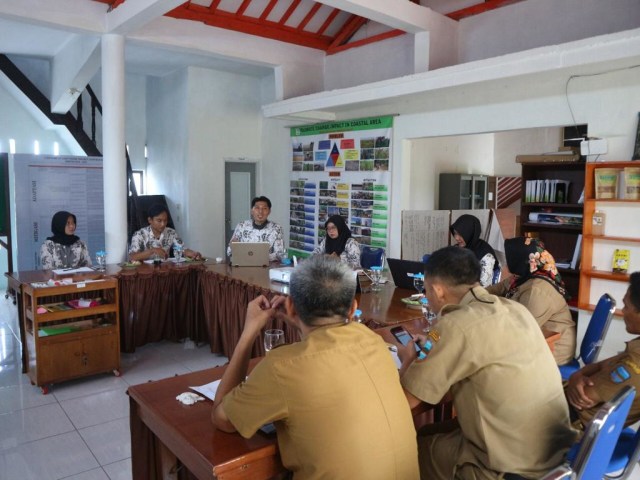
Jaringan Masyarakat Tani Indonesia (JAMTANI) continues to introduce new breakthroughs to support the welfare of disadvantaged communities. Supported by the APFP-FO4A program, JAMTANI has carried out a policy advocacy initiative to help formulate the Regional Action Plan (RAD) for Climate Change Adaptation in Pangandaran Regency, West Java. This serves as an important foundation for climate-friendly development in the region.
Targeting local government engagement, the program positions itself as a stimulant, encouraging existing organizations to grow by exploring the unique potential of each area. “Government policies often aim to support local communities, but in reality, they are not always synergistic or relevant to community needs. As a result, they can miss the target,” explained Kustiwa Adinata, Chairman of JAMTANI.
Through this advocacy initiative, JAMTANI successfully became part of the working team responsible for drafting the RAD document on climate change adaptation. This involvement opens the door for continuous participation in the formulation of development programs, particularly through development planning deliberations (Musrenbang).
The initiative also represents a form of program negotiation, aligned with climate change, a strategic issue that continues to grow in urgency due to global warming. As team leader, JAMTANI works closely with Bappeda and the Bogor Agricultural Institute (IPB), which served as consultants in the preparation of the document.
“JAMTANI is encouraging the Pangandaran local government to align with national programs led by Bappenas and the Ministry of Environment and Forestry (KLHK). We are also pushing Bappeda to prepare a Regional Action Plan for Climate Change Adaptation (RAD API) as a development guideline that addresses the negative impacts of climate change across various sectors,” Kustiwa added.
The RAD-API is integrated into the Regional Long-Term Development Plan (RPJMD) as well as into the vision and mission of the Pangandaran Regent. Its operational implementation is further translated into work programs handled by relevant Regional Technical Implementation Units (UPTDs), such as those under the Agriculture Service, Health Service, Environmental Service, Public Works Service, and others.
With this structure in place, JAMTANI hopes that rural communities will significantly benefit, especially since many development initiatives stem from community proposals submitted through several planning mechanisms. “Several government programs have begun accommodating the aspirations of local communities, including through Musrenbang. Even village funds are now paying more attention to human resource development alongside infrastructure. In addition, private companies have been encouraged to allocate CSR budgets to several assisted locations based on identified needs,” Kustiwa noted.
Looking ahead, the final adoption of the RAD-API document is expected once the regional election process concludes in December 2024. After that, civil society can continue to oversee its implementation through Bappeda and the regional parliament (DPRD). This will allow communities to consistently propose appropriate, climate-friendly programs—especially in the area of sustainable agriculture.
“The point is: the struggle is not over. Continued monitoring is still needed. Although the drafting of the RAD-API document marks a major achievement, one that involved full coordination between the government and community organizations like JAMTANI, our work must continue,” concluded Kustiwa.
The APFP-FO4A program is implemented by the Asian Farmers’ Association for Sustainable Rural Development (AFA) and La Via Campesina (LVC), with funding support from the European Union (EU) and the International Fund for Agricultural Development (IFAD). The program aims to strengthen the capacities of farmers’ organizations to provide economic services, advocate for enabling policies, and promote sustainable livelihoods for small-scale family farmers across Asia.