Background
The Barangay Calube Farmers Multipurpose Cooperative (BACFA-MPC), located in Barangay Calube, Sultan Naga Dimaporo, Lanao del Norte, Philippines, is dedicated to enhancing the quality of life for farmers, both members and non-members, by creating sustainable income-generating activities.
The cooperative has approximately 183 active members engaged primarily in banana production, maintaining partnerships with about five (5) market outlets. Each farmer owned an average of 1.82 hectares of farmland, totaling around 122.7 hectares under cultivation.
During the COVID-19 pandemic, when mobility restrictions limited access to markets and resources, many coconut farmers were encouraged to intercrop Cardava bananas with their coconut trees as an alternative source of livelihood. While this strategy successfully increased banana yields, the limited market capacity resulted in large quantities of bananas being left unsold, thus, many of which eventually spoiled or were eaten by birds and farm animals. The farmer-members initially struggled to find a solution to this problem.
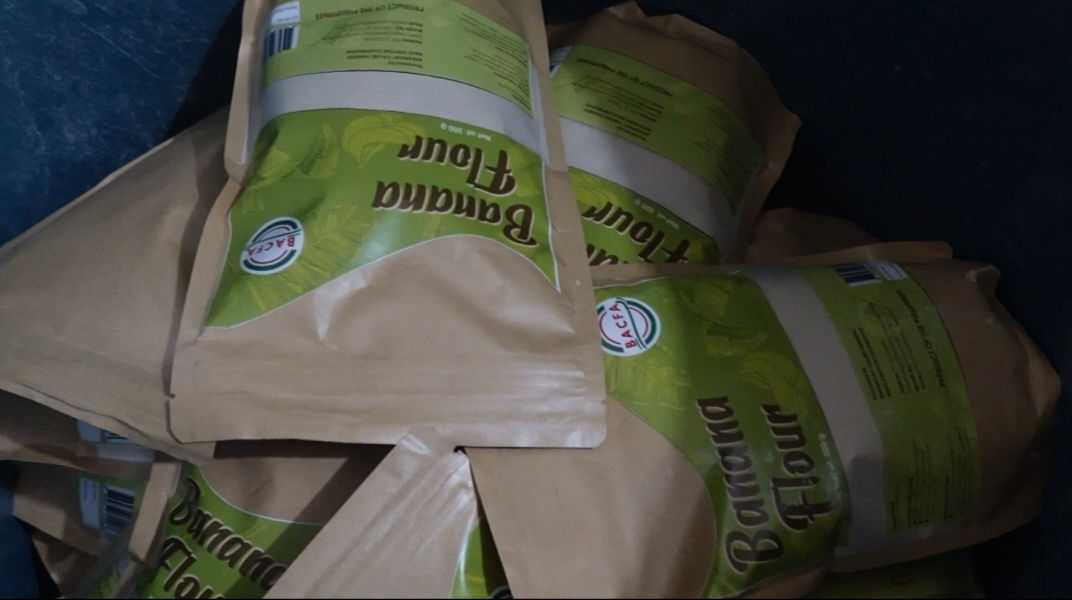
In response, the cooperative administration considered processing banana chips as a value-adding enterprise. However, based on the advice of the Department of Trade and Industry (DTI), the plan was deferred due to market saturation in banana chip production. Consequently, BACFA-MPC took the initiative to serve as the primary market outlet for banana producers in the community, including both cooperative members and non-members. This led to the conceptualization of the Banana Flour Production Project, designed to strengthen the local banana value chain, from farm-level production to cooperative-level processing and marketing.
Through the implementation of the Asia-Pacific Farmers’ Program (APFP) – Farmers’ Organizations for Asia (FO4A), BACFA-MPC received a working capital grant amounting to PHP 1,018,883.35 (USD 19,000), part of which was allocated for the procurement of a solar dryer, electric dryer, and pulverizing machine to support the cooperative’s banana flour processing activities.
The Asia-Pacific Farmers’ Program (APFP) – Farmers’ Organizations for Asia (FO4A) is implemented by the Asian Farmers’ Association for Sustainable Rural Development (AFA) and La Via Campesina (LVC), with funding from the European Union (EU) and the International Fund for Agricultural Development (IFAD). The program aims to strengthen the capacities of farmers’ organizations to provide economic services, advocate for enabling policies, and promote sustainable livelihoods for small-scale family farmers across Asia.


The key machines and equipment utilized by BACFA ensure an efficient and standardized banana flour production process. These equipment were procured by KAMMPIL with the financial support from APFP-FO4A program.
Innovations and good practices
Innovation and the application of good practices play a vital role in strengthening business sustainability and maximizing community impact. Similar to other progressive cooperatives, the Barangay Calube Farmers Multipurpose Cooperative (BACFA-MPC) has integrated several innovative approaches and commendable practices into its banana flour production enterprise, contributing significantly to its operational success and social relevance.
One of BACFA’s core strengths lies in the active participation and commitment of its members in cooperative activities. Unlike in some cooperatives where participation is primarily motivated by material incentives, BACFA members demonstrate genuine dedication and a strong sense of collective responsibility. Their engagement reflects the cooperative’s deeply rooted culture of volunteerism and shared purpose, which has become a vital foundation for sustaining the organization’s operations.
Another highly commendable practice within BACFA is its emphasis on women’s involvement in the banana flour production process. From peeling and slicing bananas to drying, grinding, and packaging the finished flour, all production workers are women. This initiative not only promotes gender equality and women’s empowerment but also provides an accessible livelihood opportunity for women in the community, especially those whose husbands are engaged in fieldwork or construction jobs. The nature of banana processing, which is less labor-intensive compared to coconut production, makes it particularly suitable for women, allowing them to actively contribute to the household income while maintaining balance with their family responsibilities.


Some of the women members of BACFA MPC who are involved in banana flour processing
Jena, 46, resides in Purok 2, Calube, Sultan Naga Dimaporo, Lanao del Norte, and is the current chairman of BACFA. She is a farmer whose primary commodities include coconuts and bananas, complemented by several fruit-bearing intercrops, such as lanzones, rambutan, and marang. With over 20 years of farming experience, Jena has been an active member of BACFA-MPC since 2000, having been encouraged to join by her sister, one of the cooperative’s pioneering members. Her motivation for joining stemmed from her hope that the cooperative could serve as a support system for smallholder farmers like herself. At the individual level, Jena applies her own innovative practices to maintain the productivity and health of her Cardava banana plantation. She ensures the cleanliness and proper maintenance of her farm to prevent weeds and other competing vegetation from depriving the banana plants of essential nutrients. Additionally, she uses organic fertilizers, which she considers beneficial not only for plant growth but also for the long-term preservation of soil health and the environment.
Impact
The impact of BACFA’s innovations and good practices is evident in the significant improvements observed in both the cooperative’s operations and the livelihoods of its member-farmers. The active and genuine participation of members serves as a key driver of productivity and organizational success. When members are highly engaged and perform their roles effectively, the cooperative likewise achieves better performance outcomes, including increased production and higher sales.
One of the most notable impacts of BACFA’s initiatives is its promotion of women’s empowerment through the banana flour production enterprise. By prioritizing women as the primary workforce in processing, from peeling and drying to milling and packaging, the cooperative has created meaningful employment opportunities that enhance women’s economic independence. This initiative allows them to contribute financially to household needs, particularly food and education, while also fostering a sense of self-worth, pride, and dignity. It enables women to take on active roles beyond traditional household responsibilities, thereby strengthening their confidence and status within the community.
At the individual level, members’ farming practices have also generated positive results. For Jena, her consistent maintenance of farm cleanliness, specifically by controlling weeds and unwanted vegetation, has helped improve the quality and yield of her Cardava bananas, resulting in increased income for her. Moreover, the use of organic fertilizers has proven to be both cost-effective and sustainable. Since most of its components can be locally sourced, it reduces production costs and allows farmers to allocate more of their budget toward essential household needs, such as food and education. Additionally, organic farming contributes to environmental protection and food security, as it avoids harmful chemicals and promotes soil health for long-term agricultural productivity.
Overall, the impacts of BACFA’s good practices are multidimensional, encompassing financial, personal, and environmental benefits. The cooperative’s initiatives not only strengthen members’ livelihoods and self-reliance but also advance sustainable and inclusive development within the community. Continued application and expansion of these practices are expected to yield even greater social and economic benefits in the years ahead.
According to Jena, there is no fixed or formal policy from the Local Government Unit (LGU) or other government agencies in the province or region mandating the adoption of organic farming practices or the involvement of women in agricultural enterprises. However, these institutions strongly encourage and promote agroecological approaches and the active participation of women in economic activities beyond their traditional household roles. This supportive environment has helped create a culture that values both sustainable agriculture and gender inclusivity.
In addition, the Department of Agriculture (DA) has extended its support by providing free training programs focused on organic farming and its various benefits. These capacity-building initiatives have enhanced the members’ technical knowledge and appreciation for environment-friendly and health-conscious production methods.


These photos show the procedures done by BACFA MPC in producing high-quality banana flour.
The cooperative itself, BACFA, has also demonstrated strong internal support for its members. It regularly offers financial literacy and marketing strategy trainings to help members manage their household finances more effectively, distinguish needs from wants, and secure better markets for their agricultural products. Such programs not only strengthen the cooperative’s overall performance but also empower individual members by equipping them with practical skills for both personal and professional development Furthermore, the participant emphasized that many of these good practices, particularly the emphasis on women’s involvement, have been longstanding components of BACFA’s operations, embedded in its culture since the early years of the cooperative’s establishment. This consistency has contributed greatly to the sustainability and success of their initiatives.
Facilitating factors and challenges
Like many other enterprises, BACFA has encountered several challenges and setbacks throughout the implementation and operation of its banana flour production project. According to Jena, their main challenge during the early phase was financial constraint. The cooperative struggled to sustain the project’s initial requirements, as the cost of construction and facilities was already high. The only counterpart contribution they could afford at that time was their existing building, which served as the production site. Consequently, they had no remaining funds to purchase the necessary raw materials and machinery.
Fortunately, BACFA became part of the APFP-FO4A program, through the Kalipunan ng Maliliit na Magniniyog ng Pilipinas (KAMMPIL), the program’s national implementing agency in the Philippines. Jena emphasized that without the support of these funders, the banana flour production would not have been possible. The acquisition of appropriate equipment greatly improved the quality of their flour, enabling them to meet market standards and ensure food security by producing an all-natural product within their cooperative.
Another significant challenge identified was the irregular supply of Cardava bananas, which is often affected by climate-related factors such as drought, typhoons, and plant diseases. Although these occurrences are seasonal, they occasionally disrupt production schedules and supply stability. Infrastructure limitations also posed difficulties, particularly the farm-to-market road, which remains underdeveloped. Being located in a mountainous area, the cooperative faces accessibility issues that hinder the efficient transport of raw materials and finished products. Fortunately, through the intervention of the Department of Trade and Industry’s RAPID Program (DTI-RAPID), as well as continued visits and support from other agencies such as Department of Agriculture (DA), Agricultural Training Institute (ATI), and Philippine Coconut Authority (PCA), improvements have been made, benefiting not only the cooperative but also the entire community of Barangay Calube.
At present, BACFA is facing a major operational issue concerning their Food and Drug Administration (FDA) approval. Their banana flour has not yet obtained FDA certification, which is a crucial requirement for large-scale market release and public distribution. As a result, the cooperative’s operations have been temporarily halted until the necessary facility upgrades and compliance requirements are fulfilled. According to the participant, this process demands a significant budget to meet FDA standards for safety and sanitation.
Lastly, a sustainability concern looms over the cooperative’s long-term operations. Many of its active members are aging farmers, while younger generations show little interest in agriculture. The participant shared that her own children do not engage in farming—her eldest daughter, currently in college, is pursuing a degree in Nursing. This generational gap poses a real threat to the continuity of farming activities and cooperative participation in the years to come.


KAMMPIL and AFA team facilitate the FEAT assessment with BACFA to support the cooperative in analyzing and enhancing its enterprise operations.
Lessons learned
The implementation of the BACFA-MPC Banana Flour Production Project has generated significant lessons on cooperative management, gender inclusion, innovation, and partnership-driven rural enterprise development.
First, the case highlights the critical role of external partnerships and development support in enabling local cooperatives to initiate and sustain value-adding enterprises. Through the APFP-FO4A program and with support from KAMMPIL, BACFA-MPC received essential working capital and machinery that allowed them to operationalize their banana flour processing facility. Without this funding, the cooperative would not have been able to overcome its initial financial constraints or meet production and quality standards. This underscores that multi-level collaboration between international development agencies and grassroots farmer organizations can serve as a cornerstone for rural enterprise success.
Second, BACFA’s experience demonstrates that strong member participation and shared ownership are vital for cooperative sustainability. The active involvement and volunteerism of members, especially women, ensured consistent production and collective accountability. Such participatory engagement fosters a sense of pride and responsibility that transcends monetary incentives and contributes to long-term organizational resilience.
Third, the cooperative’s emphasis on women’s involvement in the entire banana flour production process showcases a replicable model for gender empowerment in rural livelihoods. By employing women as the primary workforce in processing and packaging, BACFA has proven that gender-inclusive economic models enhance productivity while creating equitable income opportunities.
Fourth, the case illustrates that innovation in agricultural practices, such as the use of organic fertilizers and proper farm management, improves both yield and environmental sustainability. Members’ adoption of cost-efficient, eco-friendly farming techniques reflects the cooperative’s alignment with agroecological principles that prioritize soil health and food safety.
Finally, BACFA’s journey underscores the importance of institutional and technical support in navigating compliance requirements and market readiness. The cooperative’s current challenge in securing Food and Drug Administration (FDA) certification highlights that while production innovation can be achieved at the community level, sustaining and scaling such enterprises require capacity building, facility upgrading, and continuous mentorship to meet regulatory and quality standards.
Recommendations
Building on the experiences and challenges of BACFA-MPC, several policy and programmatic recommendations are proposed for development agencies, government institutions, funding organizations, and other stakeholders:
1. Provide continued and targeted funding support for facility upgrading and compliance with regulatory requirements such as FDA certification. Access to such funds will enable cooperatives like BACFA to improve their processing areas, sanitation systems, and documentation processes which are key prerequisites for securing government approval and entering broader markets.
2. Expand support for value-added product development using banana flour and other local resources. Funding agencies and technical partners should assist cooperatives in exploring new product lines such as banana-based cookies, pastries, and other processed goods that can increase income diversity and market competitiveness.
3. Develop youth engagement programs to address sustainability and generational gaps. The declining interest of young people in farming threatens the continuity of agricultural enterprises. Introducing agri-entrepreneurship training, youth cooperative internships, and digital marketing initiatives can inspire younger generations to participate in and modernize farming and processing activities.
4. Strengthen policy frameworks that promote cooperative-based enterprise development. Government agencies should institutionalize incentives and technical assistance for cooperatives that pursue value-adding, organic, and women-led initiatives. This can include access to financing, product certification, marketing support, and inclusion in national agri-processing programs.
5. Enhance market linkage and branding support for locally produced banana flour. Assistance in marketing, labeling, and quality assurance will help BACFA position its products in institutional and commercial markets, ensuring competitiveness and consumer trust once FDA approval is secured.
6. Institutionalize capacity-building and mentorship programs focusing on business planning, quality control, and sustainability management. Regular trainings and knowledge exchanges can help cooperatives strengthen operational efficiency and prepare for long-term viability.
7. Promote continued collaboration among international and national partners. Their multi-level support should not only focus on funding but also on providing technical guidance, monitoring, and linkages to other cooperatives engaged in value-adding initiatives to ensure collective learning and scalability.
In conclusion, the BACFA case demonstrates that with sustained institutional support, inclusive participation, and adaptive strategies, smallholder cooperatives can transform local agricultural challenges into sustainable livelihood opportunities. However, long-term success will depend on their capacity to achieve regulatory compliance, diversify production, and engage the next generation in continuing the cooperative legacy.
Related documentation