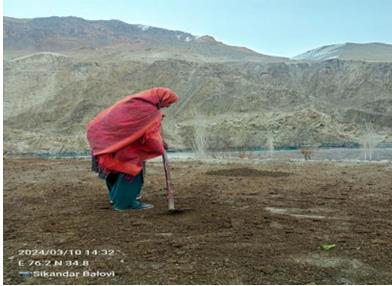
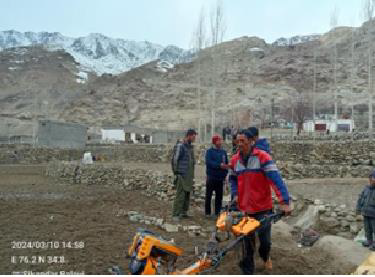
Gilgit-Baltistan, Pakistan – Nestled in the breathtaking Tarkati Valley of Kharmang District, Gilgit-Baltistan, the Stunchuli Farmers’ Cooperative Society has revolutionized local agriculture and improved farmers’ livelihoods. Previously grappling with low productivity, outdated techniques, and financial instability, farmers relied on apricot production, livestock, and staple crops, but faced exploitation by middlemen offering minimal rates.
Support and technical guidance from the Agribusiness Support Fund (ASF) and funding support from the APFP-FO4A and ARISE programs catalyzed change through the formation of the cooperative.
The Asia-Pacific Farmers’ Program (APFP) – Farmers’ Organizations for Asia (FO4A) is implemented by the Asian Farmers’ Association for Sustainable Rural Development (AFA) and La Via Campesina (LVC), with funding from the European Union (EU) and the International Fund for Agricultural Development (IFAD). The program aims to strengthen the capacities of farmers’ organizations to provide economic services, advocate for enabling policies, and promote sustainable livelihoods for small-scale family farmers across Asia.
The Assuring Resiliency of Family Farmers (ARISE-Farmers) program was first launched in response to the COVID-19 pandemic, aiming to empower farmers’ groups to meet their members’ needs and ensure food security during the crisis. The succeeding phase of the program continues its mission to help family farmers become more resilient and self-reliant. It focuses on strengthening the capacities of farmers’ organizations (FOs) to manage production support for their members while expanding partnerships with governments, private sector actors, and financial institutions. Through this approach, ARISE addresses the persistent financing gap and helps smallholder farmers gain better access to markets.
With support from the APFP-FO4A program and the ARISE loan program implemented by the ASF, farmers adopted modern techniques, including certified seeds, enabling high-yield cultivation of crops like red beans, white beans, and garlic on Tarkati’s fertile soils. Technical training in good agricultural practices, pre-and post-harvest management, and marketing strategiesempowered farmers to sell directly at premium rates, bypassing middlemen and maximizing profits.
Livestock farming thrived with the introduction of Australorp hens, known for high egg production, creating a sustainable income stream through egg and breed sales. Apricot production saw dramatic improvements as farmers used ARISE loans to acquire drying trays, reducing wastage from 18,910 kilograms to 1,260 kilograms and increasing incomes from PKR 1,444,980 (USD 5,198) to PKR 2,789,960 (USD 10,035). The cooperative’s premium apricots and kernels gained access to competitive urban markets, diversifying income sources and strengthening financial security.
The Stunchuli Farmers’ Cooperative exemplifies how grassroots efforts, innovation, and collective action can transform rural communities and bring enduring prosperity.
* USD 1= PKR .278, December 2024