Background
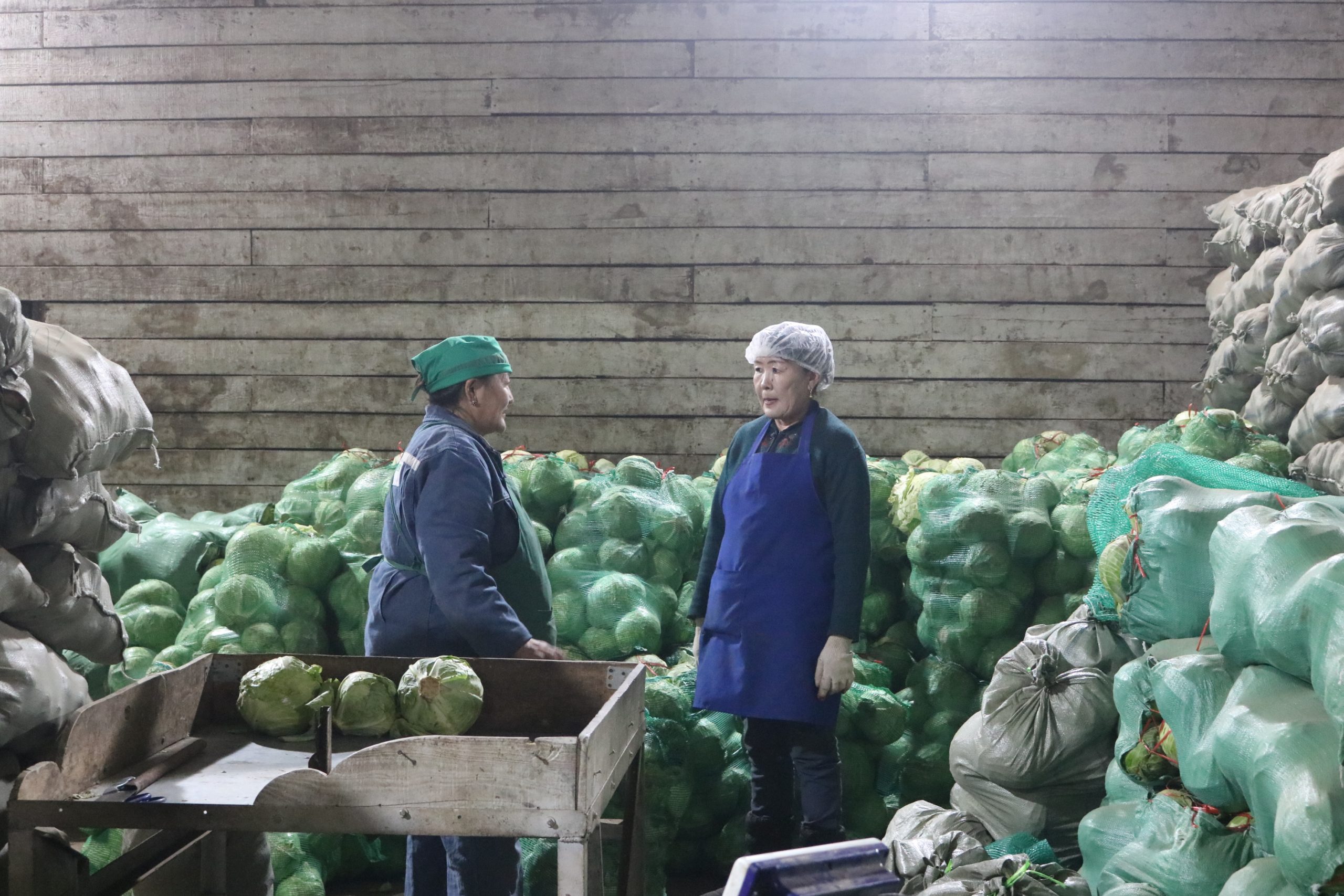
Established in 2018, the Tsever Khursnii Shim Cooperative is a farmer-led organization specializing in the processing and supply of washed, sliced, and packed vegetable products. The cooperative brings together 18 member entities representing 1,501 individual farmers across the provinces of Tuv, Selenge, Orkhon, Darkhan-Uul, and Zavkhan in Mongolia. Based in Ulaanbaatar, it plays a critical role in aggregating, processing, and supplying vegetables from rural producers to urban markets.
The cooperative employs 30 staff and operates through structured marketing and production planning aligned with buyer demand. It is certified under Good Hygienic Practices (GHP) and Good Agricultural Practices (GAP)standards and has built a strong reputation for quality, reliability, and consistency. Tsever Khursnii Shim supplies fresh and semi-processed vegetables to approximately 60 supermarkets, as well as public procurement programs, including school lunch and government feeding initiatives.
Despite strong and growing market demand, the cooperative faced a key operational constraint: limited processing capacity. Its ability to process surplus produce was insufficient to meet increasing requirements from urban retailers, who increasingly demanded washed, peeled, and sliced vegetables delivered on a continuous and reliable basis. Without expanded processing capacity, the cooperative risked losing value, missing market opportunities, and limiting income growth for its 1,501 farmer members.
During peak harvest seasons, large volumes of vegetables were also mechanically damaged or failed to meet size standards. These products were either wasted or sold at very low prices, contributing to post-harvest losses and reduced returns for farmers.
Innovations/Good Practices
In 2022, Tsever Khursnii Shim Cooperative received USD 6,000 through NAMAC’s revolving fund scheme under the APFP-FO4A program to implement its business plan to expand operations at its vegetable sorting, packaging, and processing center. This funding was repaid in full, demonstrating strong financial discipline and operational viability. In 2023, the cooperative received an additional USD 15,000 under the APFP-FO4A project, further strengthening its financial position and enabling continued expansion.
The Asia-Pacific Farmers’ Program (APFP) – Farmers’ Organizations for Asia (FO4A) is implemented by the Asian Farmers’ Association for Sustainable Rural Development (AFA) and La Via Campesina (LVC), with funding from the European Union (EU) and the International Fund for Agricultural Development (IFAD). In Mongolia, the program is implemented by the National Association of Mongolian Agricultural Cooperatives (NAMAC).
With this support, the cooperative upgraded its processing capabilities, including the installation of vegetable washing and slicing equipment, enabling increased production of semi-processed vegetables. The cooperative operates from a 1,500-square-meter processing plant equipped with a 600-ton capacity warehouse, a wind-cooled cellar, and four delivery vehicles, ensuring efficient storage, processing, and distribution to meet rising market demand.
Impact
Following the implementation of the business plan, the cooperative began to see tangible and lasting results. Its product range expanded from six fresh vegetables to 13 semi-processed varieties, responding to growing demand for ready-to-use produce. Market access increased significantly, with supplies reaching 36 branches of Nomin supermarkets, 20 branches of Sansar supermarkets, and government-supported programs such as school lunch initiatives.
The cooperative also diversified its marketing channels by supplying products through OEM (Original Equipment Manufacturer) arrangements, enabling it to serve private-label buyers. In addition, Tsever Khursnii Shim markets its products online through www.mongolnogoo.mn, increasing accessibility for consumers and institutional buyers.
Sales performance improved markedly, with net revenues exceeding USD 1.5 million over the past two years, supported by efficient production processes and expanded market reach. At the same time, post-harvest losses declined as vegetables previously considered waste were processed and sold.
Environmental sustainability was strengthened through the conversion of production by-products into organic fertilizer, reducing waste and creating additional value for cooperative members. This approach supports both environmental protection and cost efficiency while meeting increasing urban demand for semi-processed products.
As a result, farmers now enjoy more stable incomes and secure market access for their produce. Urban consumers benefit from safe, convenient, ready-to-use vegetables, supporting healthier diets and lifestyles. The cooperative is managed by a dedicated enterprise management team responsible for daily operations, compliance with agricultural handling standards, and strategic decision-making, ensuring high-quality and reliable supply.
“With the new processing equipment, we can transform vegetables that were once wasted into products that feed our community and improve farmers’ livelihoods,” said the cooperative manager.
The Tsever Khursnii Shim Secondary Cooperative demonstrates how targeted investment in cooperative-led value addition can transform agricultural systems. With support from APFP-FO4A, the cooperative has moved beyond simple aggregation to efficient, high-value processing—improving farmer incomes, meeting urban market demand, reducing post-harvest losses, and contributing to inclusive economic growth, food security, and sustainable food systems in Mongolia.
Related documentation: