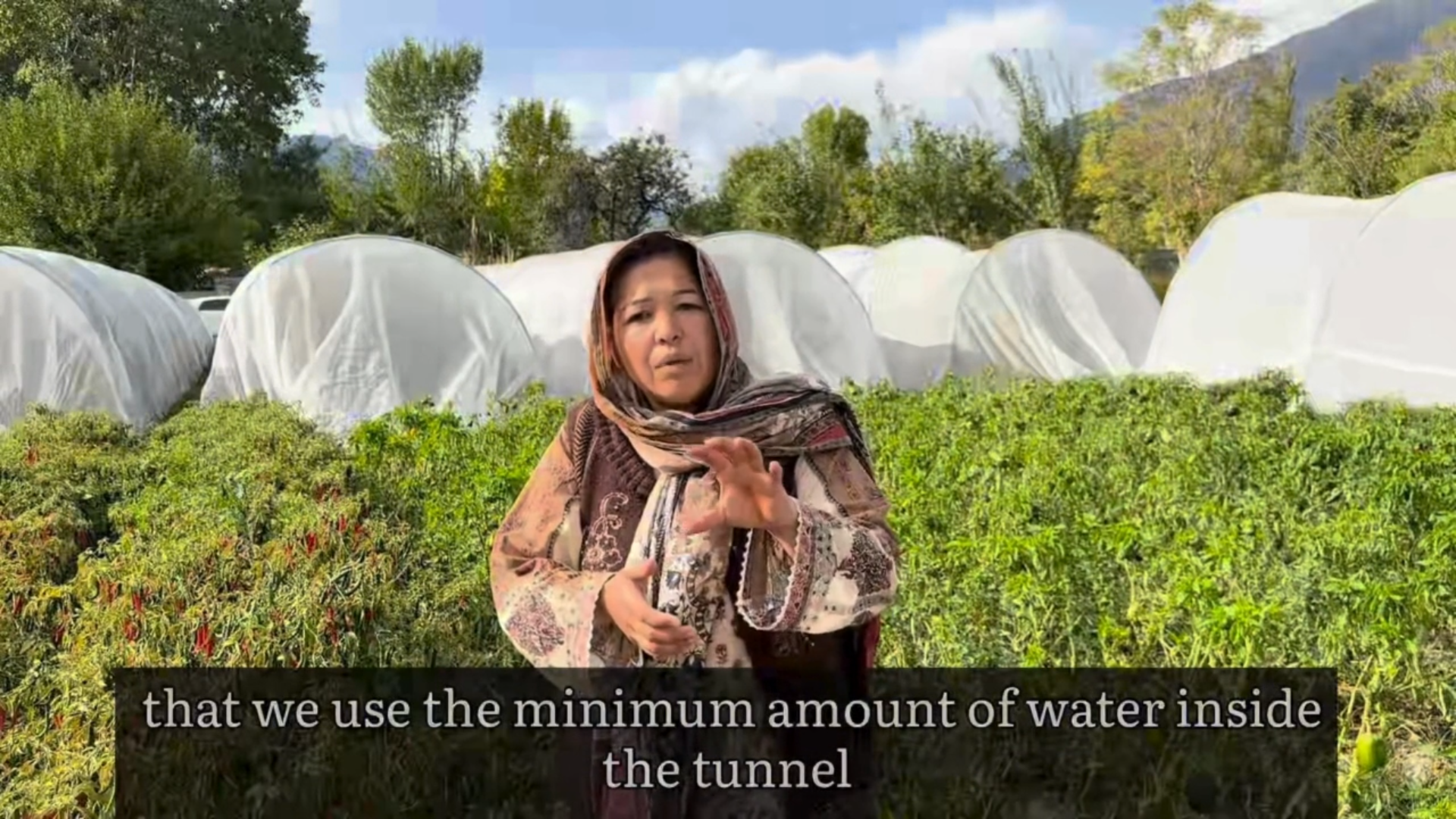
Danyore is a peaceful valley where farming is the primary source of livelihood for most families. For years, farmers worked hard on their land, yet production remained low, and incomes were barely enough to meet household needs. Despite their dedication, progress was limited, and many families struggled to move beyond subsistence farming.
A turning point came when the Agribusiness Support Fund (ASF) reached the community through its various initiatives. With the establishment and strengthening of the Chikas Farmers Cooperative Society, farmers began to approach agriculture as a business. Members were introduced to new practices such as vertical farming, apricot drying, and value addition of cherries.
In addition, cooperative members received extensive training in finance, procurement, and climate-smart agriculture. The support included access to quality seeds and agricultural inputs, enabling farmers to improve productivity and manage their operations more effectively. These skills strengthened both individual farmers and the cooperative as an enterprise.
Collective marketing became one of the cooperative’s most impactful achievements. By selling produce directly to the market, the cooperative eliminated middlemen. Through a modest 5 percent commission charged to members, farmers earned over 15% more profit compared to local market sales. The income generated through collective marketing allowed the cooperative to invest in a cold storage facility, which enables farmers to store vegetables during periods of low prices and sell them later based on market analysis, protecting incomes from sudden price drops. To further address market volatility, the cooperative secured land for tunnel farming, increasing production and improving supply consistency.
One of the most remarkable features of the Chikas Farmers Cooperative Society is its commitment to women’s leadership. Women make up 80% of the cooperative’s membership, which is a significant milestone in Gilgit-Baltistan, where women play a major role in agriculture but are often unrecognized. The cooperative actively involves women in decision-making processes, provides mentorship, and supports them to take on leadership roles.
Access to finance through the ARISE program has further strengthened the cooperative by meeting its working capital needs and sustaining its growing operations.
The Asia-Pacific Farmers’ Program (APFP) – Farmers’ Organizations for Asia (FO4A) is implemented by the Asian Farmers’ Association for Sustainable Rural Development (AFA) and La Via Campesina (LVC), with funding from the European Union (EU) and the International Fund for Agricultural Development (IFAD). The program aims to strengthen the capacities of farmers’ organizations to provide economic services, advocate for enabling policies, and promote sustainable livelihoods for small-scale family farmers across Asia.
The Assuring Resiliency of Family Farmers (ARISE-Farmers) focuses on strengthening the capacities of farmers’ organizations (FOs) to manage production support for their members while expanding partnerships with governments, private sector actors, and financial institutions. Through this approach, ARISE addresses the persistent financing gap and helps smallholder farmers gain better access to markets.
APFP-FO4A and ARISE programs are implemented in Pakistan by the ASF.
Related documentation: