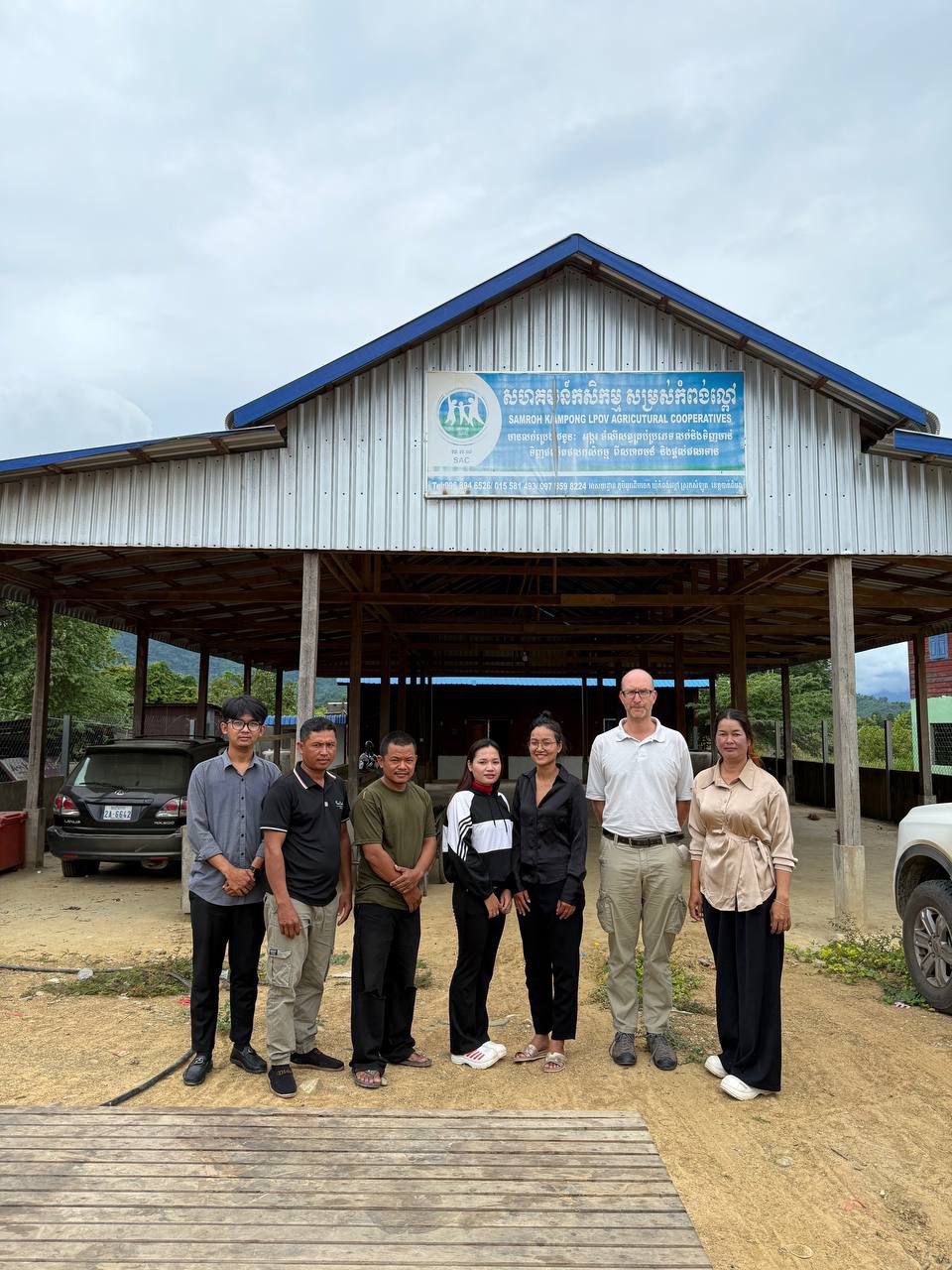


This case study documents the journey of Ham Samboeun, a young woman farmer from the conflict‑affected Samlot district of Battambang province, Cambodia. From a childhood marked by poverty, loss, and migration, she emerged as a successful agripreneur and was elected President of the Samras Kampong Lapov Agricultural Cooperative (SKLAC). Her experience illustrates how grassroots cooperative engagement, targeted capacity‑building, and access to finance can empower women and youth to lead resilient agribusinesses while strengthening local institutions. The case offers practical lessons on inclusive cooperative governance, responsible agribusiness growth, and community‑led development.
Background
Ham Samboeun was born in 1986 into a family deeply affected by the legacy of the Khmer Rouge and subsequent civil conflict in western Cambodia. She grew up in a war‑torn area where livelihoods were fragile and opportunities limited. The loss of her father during the conflict left her mother widowed and the family economically vulnerable.
At the age of 12, Samboeun began attending a local community school while helping her mother support the household. Despite persistent financial and social constraints, she remained determined to continue her education, completing high school at the age of 24, an achievement that was uncommon in her context.
In 2014, she married, but with limited employment opportunities at home, she and her husband migrated to Thailand in search of work. Over six years abroad, they achieved only modest economic gains. In 2020, they decided to return to their home village of Kampong Lapov, motivated by the desire to build a more stable future through agriculture and community‑based enterprise.
Innovations and Good Practices
After returning home, Samboeun joined the Samras Kampong Lapov Agricultural Cooperative (SKLAC), recognizing the cooperative as a pathway to improve her family’s livelihood through collective action, learning, and shared resources. While her husband focused on livestock rearing, Samboeun actively participated in cooperative activities and training programs supported by FAEC Cambodia under the APFP‑FO4A program.
The Asia-Pacific Farmers’ Program (APFP) – Farmers’ Organizations for Asia (FO4A) is implemented by the Asian Farmers’ Association for Sustainable Rural Development (AFA) and La Via Campesina (LVC), with funding from the European Union (EU) and the International Fund for Agricultural Development (IFAD). The program aims to strengthen the capacities of farmers’ organizations to provide economic services, advocate for enabling policies, and promote sustainable livelihoods for small-scale family farmers across Asia.
Through these programs, she strengthened her skills in cooperative and community management, financial management and bookkeeping, agribusiness planning and development, and access to credit, savings mechanisms, and markets.
Beyond training, she took on increasing responsibility within SKLAC, serving on the Board of Directors and contributing to key committees, including internal monitoring as well as credit and savings management. These roles enhanced her leadership skills and visibility within the cooperative.
Applying the knowledge gained through training and cooperative engagement, Samboeun developed a business plan focused initially on livestock production. She accessed SKLAC’s credit and savings scheme, securing an initial loan of 1,200,000 riels (approximately USD 300). Starting with a personal investment of around USD 2,000, she gradually expanded her enterprise, reinvesting profits and later accessing additional loans from private banks. Her total business investment eventually grew to USD 5,000, and later exceeded this amount as her operations diversified.
Key strategies that supported her growth included:
- Entering contract farming arrangements to secure reliable input supply and stable markets
- Building strong relationships with suppliers and buyers
- Diversifying production to include cassava, rice, aquaculture, and multiple livestock activities
- Acquiring additional land for cultivation and constructing facilities for fish, frog, and livestock rearing
To further stabilize household income, Samboeun and her mother also established a small home‑based retail enterprise, locally known as a “chab huay,” selling basic goods to the community.
Impact
By 2024, Samboeun had invested more than USD 20,000 in her diversified agricultural and non‑farm enterprises. She became a leading local supplier of pigs, eggs, cassava, and paddy rice, serving markets at village, district, and provincial levels.
At the same time, SKLAC grew into a dynamic and reputable cooperative, known for its reliability, innovation, and strong partnerships. Under her leadership and active participation, the cooperative established collaboration with the Provincial Department of Agriculture, Forestry and Fisheries (PDAFF) and multiple non‑governmental organizations.
In early 2025, Samboeun was elected President of SKLAC for a third mandate, reflecting the trust and confidence of cooperative members. During her leadership:
- SKLAC expanded contract farming schemes, improving market security and access to quality inputs
- Access to finance increased for members launching or scaling agribusinesses
- Cooperative governance became more inclusive and gender‑responsive, encouraging women’s participation in decision‑making
Stakeholders, including PDAFF and development partners, recognized SKLAC as a model for cooperative‑led investment, collaboration, and sustainable rural development.
Lessons Learned
Samboeun’s experience highlights several key lessons:
- Empowerment through education: Practical, targeted training significantly enhances the confidence and effectiveness of women and youth within cooperatives.
- Access to finance: Cooperative‑based savings and credit schemes enable young entrepreneurs to take calculated risks and expand their businesses.
- Contract farming: Structured agreements with buyers and suppliers improve market access, reduce risk, and promote business stability.
- Community engagement: Active participation in cooperative leadership and committees strengthens both individual livelihoods and collective institutions.
- Inclusive leadership: Gender‑responsive governance ensures that women have a meaningful voice and can drive innovation in agriculture.
Ham Samboeun’s journey from adversity to recognized community leadership exemplifies resilience, vision, and entrepreneurial drive in Cambodia’s evolving agricultural sector. By leveraging cooperative resources, engaging in targeted capacity‑building, and practicing inclusive leadership, she has transformed her own livelihood while contributing to the economic and social development of her community. Her story offers a compelling model for promoting youth participation, empowering women, and advancing sustainable, cooperative‑led agribusiness in rural contexts.


Discover more from APFP / FO4A / ARISE
Subscribe to get the latest posts sent to your email.
Comments are closed