
Background
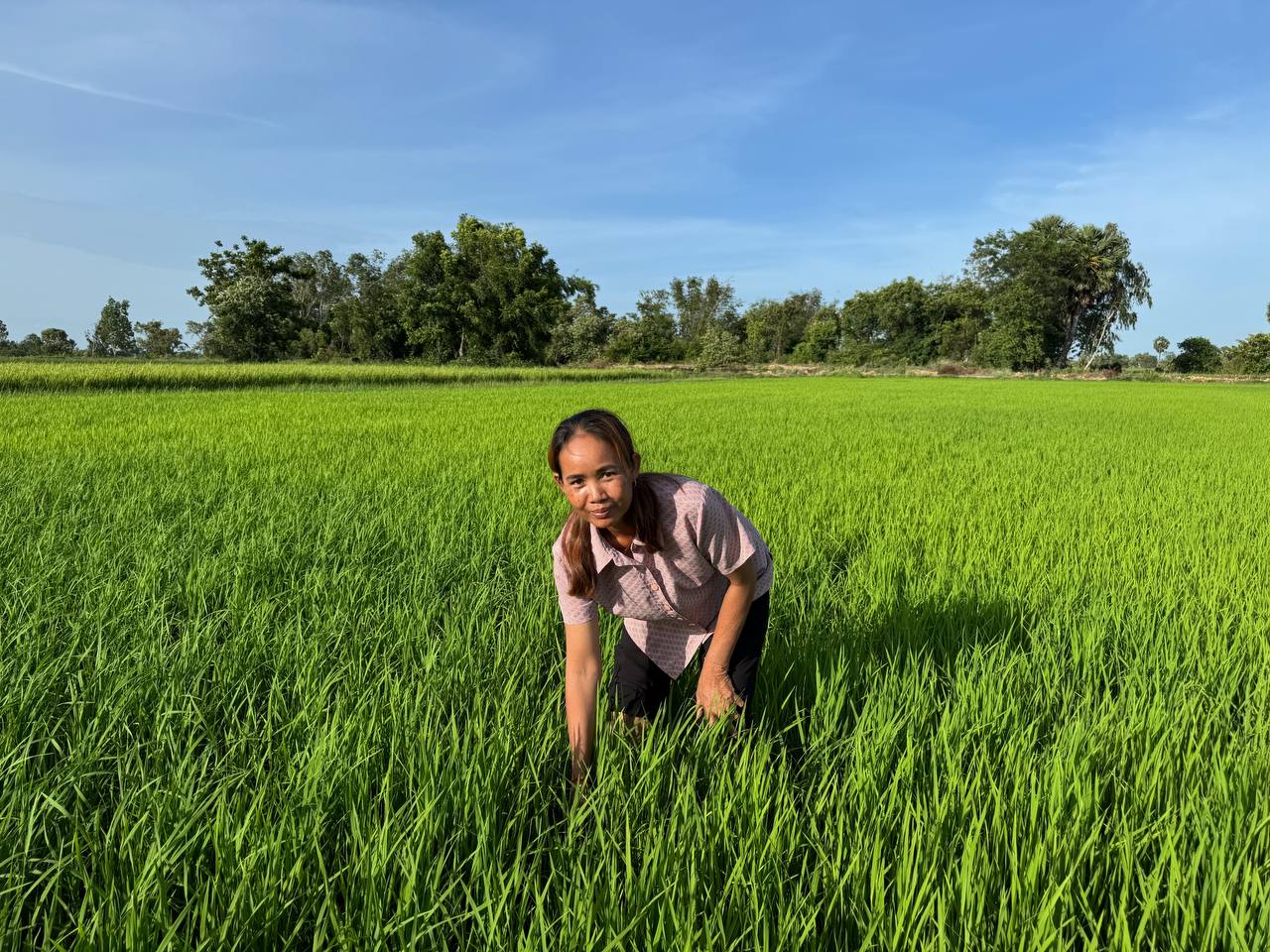
The Punleu Tmey Kdey Sang Kheum Nai Kaksekor Agricultural Cooperative in Tasong Village, Bay Damram Commune, Banan District, Battambang Province, Cambodia was officially registered with the Provincial Department of Agriculture, Forestry and Fisheries (PDAFF) on 2 February 2007. Currently, the cooperative has 115 members, including 57 women and 56 youth. The cooperative operates five major business activities: rice seed production, sustainable rice platform (SRP) rice collective business, agricultural input supply (fertilizer), agricultural credit services, and drinking water supply.
The Punleu Tmey Kdey Sang Kheum Nai Kaksekor has been a registered member of the Association Federation of Farmer Community Promoting Family Agriculture Enterprise in Cambodia (FAEC) since 2010.
Before joining the APFP-FO4A project, the cooperative organized groups of farmers producing SRP rice under contract farming arrangements with private companies. However, a significant portion of the rice produced was often rejected by buyers for failing to meet quality standards. As a result, farmers were sometimes forced to sell their produce to local middlemen at lower prices.
One of the key challenges was the limited availability of pure and high-quality rice seed varieties for SRP rice production. Although a rice seed production group had been formed, consisting of five members, it was not functioning effectively due to limited technical knowledge, insufficient financial resources, weak management, and lack of marketing support. This hindered the cooperative’s ability to supply quality rice seeds to SRP farmer groups and meet market requirements.
In 2024, through the APFP-FO4A program, in collaboration with FAEC, the cooperative committee of the Punleu Tmey Kdey Sang Kheum Nai Kaksekor Agricultural Cooperative participated in a series of capacity-building activities, including training and learning exchanges on leadership and management, marketing, financial management, and business planning.
The Asia-Pacific Farmers’ Program (APFP) – Farmers’ Organizations for Asia (FO4A) is implemented by the Asian Farmers’ Association for Sustainable Rural Development (AFA) and La Via Campesina (LVC), with funding from the European Union (EU) and the International Fund for Agricultural Development (IFAD). The program aims to strengthen the capacities of farmers’ organizations to provide economic services, advocate for enabling policies, and promote sustainable livelihoods for small-scale family farmers across Asia.
With technical guidance and coordination support from FAEC, the cooperative developed a business proposal requesting USD 8,500 in support to strengthen and expand its rice seed and fertilizer businesses over a three-year period (May 2024–May 2026), which was approved by the program’s regional implementers (AFA-LVC).
Innovations and Good Practices
The promotion of the rice seed business has enabled smallholder farmers to adopt agroecological and climate-smart agricultural practices. This has led to improved yields and higher-quality production, while reducing pest and disease pressure and minimizing pesticide use.
At the same time, the initiative has increased farmers’ income by enabling them to sell quality rice that meets private company standards. The cooperative’s rice seed business has strengthened the rice value chain, improved market competitiveness, promoted collective business models, and supported the development of a local seed distribution system. Importantly, it has reduced farmers’ dependence on costly imported seeds.
Impact
The cooperative has achieved significant results since receiving revolving funding of USD 8,500 from the APFP-FO4A program in May 2024. The number of rice seed producers increased from 5 to 10 members, including 6 women, cultivating a total of 12 hectares. These groups now produce approximately 15 tons of certified-quality rice seed per season, including: 3 tons of Rumdoul rice, 6 tons of Sen Kro Ob, and 6 tons of Sra Gner Sral.
The rice seed business generated total revenue of USD 9,500, resulting in a net profit of USD 1,000, which the cooperative plans to reinvest to further expand the business.
Through expanded sales promotion within cooperative networks and social media platforms, the cooperative has secured new purchase orders from cooperatives in Battambang, Banteay Meanchey, and Prey Veng provinces, as well as from local traders.
In addition, 74 SRP rice producers now have access to sufficient quantities of quality rice seed from the cooperative. This enables them to produce nutritious, high-quality rice that meets contractual quantity and quality standards, with guaranteed prices. As a result, the rice value chain has been strengthened, smallholder incomes have increased, and risks to human health and the environment have been reduced.
The implementation of the business plan supported by the APFP-FO4A program directly responds to the practical needs of smallholder farmers while enabling the cooperative to expand its services and products more effectively and efficiently.
Challenges
Despite these achievements, the cooperative continues to face several challenges, including:
- Labor shortages in agriculture due to youth migration to neighboring countries
- Limited capacity to monitor and strengthen rice seed producer groups
- Insufficient capital to further expand rice seed production
- Limited communication and resource mobilization capacity to support cooperative growth
Recommendations
The Punleu Tmey Kdey Sang Kheum Nai Kaksekor Agricultural Cooperative recommends that the APFP-FO4A program continue supporting the organization in the future. This includes providing additional technical support in both hard and soft skills, as well as increasing the size and duration of the revolving fund to at least five years. Such support would enable the cooperative to further expand its economic and business services, ultimately delivering greater benefits to smallholder farmers.
Looking ahead, the cooperative remains committed to strengthening and expanding its rice business by mobilizing more farmers to join production groups and by further integrating into the rice supply chain to meet growing market demand.


Discover more from APFP / FO4A / ARISE
Subscribe to get the latest posts sent to your email.
Comments are closed