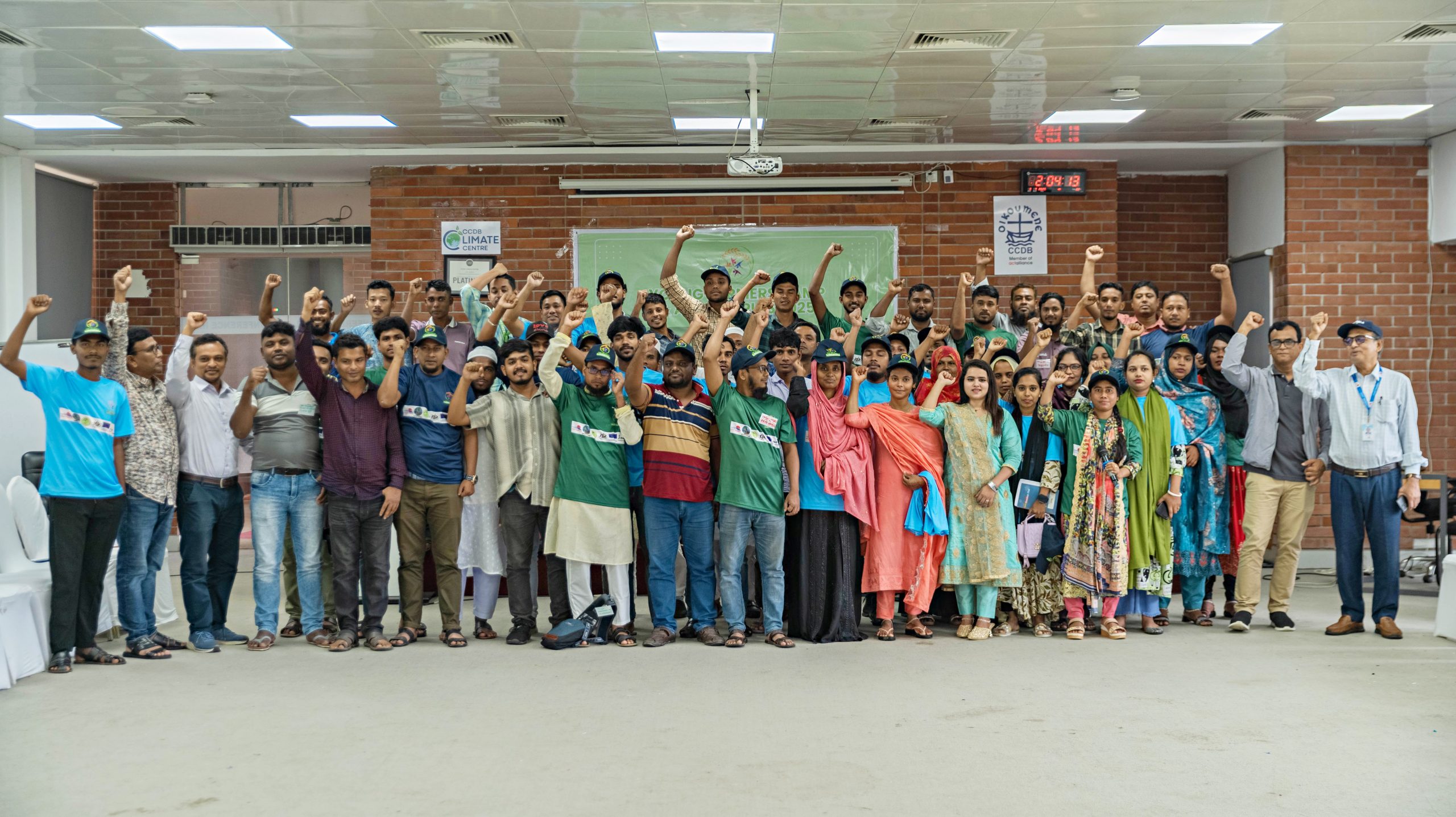
First Bangladesh Young Farmers Camp and Agrilympics (YFCA)
Gazipur Agricultural University (GAU) and CCDB Climate Centre
6-9 July 2025

The first-ever National Young Farmers Camp and Agrilympics (YFCA) 2025, held under the APFP-FO4A project, in partnership with AFA-LVC and supported by IFAD and EU, brought together 85 youth from across Bangladesh. This gathering was a start-up for youth-driven agricultural transformation and climate resilience.
Background and Rationale
Agriculture remains central to Bangladesh’s economy, directly contributing to food security, employment, and rural livelihoods. However, despite its significance, the agricultural sector is struggling to attract young people. This decline is driven by a perception that farming is labor-intensive, low-income, and lacks social prestige. Yet the future of food systems and climate resilience in Bangladesh depends on the active participation and leadership of its youth.
Bangladesh is experiencing both a youth bulge and a rapidly aging farming population. With over 30% of the national population between 15 and 35 years old, the country stands at a demographic crossroads. If this generation can be productively engaged in agriculture, Bangladesh can secure its food systems, modernize its farming sector, and build a more climate-resilient future.
Recognizing these issues, COAST Foundation organized the first National Young Farmers Camp and Agrilympics (YFCA) 2025 under its APFP-FO4A project, where the regional partner is the Asian Farmers’ Association for Sustainable Rural Development (AFA) and La Via Campesina (LVC) and is funded by the International Fund for Agricultural Development (IFAD) and the European Union (EU). The event is envisioned as a transformative platform for shifting perceptions, promoting cooperative governance, sharing innovations, and institutionalizing youth leadership in agriculture. Over four days, a total of 85 young farmers and network members from across Bangladesh gathered to share knowledge, learnings, develop skills, engage with policymakers, and draft policy recommendations.
Key Objective of this Young Farmers’ Assembly
- Raising Awareness About Farming as a Viable and Rewarding Career.
- Showcasing Innovative Agricultural Initiatives Led by Young Farmers.
- Facilitating Knowledge Exchange and Mentorship Between Experienced Farmers and Young Participants.
- Promoting Climate Resilience and Sustainable Farming Practices.
- Encouraging Youth Participation in Cooperatives and Farmers’ Organization (FO) Governance.
Key Outputs Gained from this National Assembly
- Individual learnings taken and action plan development focus on 3-month and 6-month initiatives.
- Skill transfer in climate-smart farming, agroecological practices, and fruit farming among participants.
- Documentation of young agri-entrepreneurs’ success stories and knowledge exchange.
- Strengthened partnerships between young farmers, cooperatives, and national and apex bodies.
- Consolidated feedback and evaluation reports guiding future youth-focused agricultural programs.
- Enhanced youth networking platforms promoting inter-cooperative linkages and business collaboration.
- Recognition of youth as crucial actors in FOs, influencing governance, innovation, and market linkages.
- Initiation of discussions on intra-cooperative business models led by young farmers, promoting shared services and collective marketing opportunities.


Day 1: Opening Ceremony and World Café Sessions
The opening ceremony of YFCA 2025 set both the tone and strategic direction of the event. Held at Gazipur Agricultural University (GAU), the opening ceremony gathered representatives from national agricultural bodies, development partners, agri. platform leaders, and over 150 young farmers and GAU students. Sanat Kumar Bhowmik, Deputy Executive Director, COAST Foundation, moderated the event. The session started with the introductory speech by Ma. Estrella “Esther” Penunia, Secretary General AFA, and M Rezaul Karim Chowdhury, Executive Director of COAST Foundation. The ceremony included important messages from the guests and a group photo session.
In her opening speech, Penunia said that the youth is God’s gift to the future and that the YFCA program is a space for young people to lead, innovate, and build solutions, especially in the face of the climate crisis.
M Rezaul Karim Chowdhury, Executive Director of the COAST Foundation, mentioned that it’s high time for the promotion of safe products. Accessing the market is crucial now. He also added that agricultural cooperatives should have control over marketing and pricing.
Md. Amirul Islam, Operations Manager-East, Central and South Asia, AFA, described that young people are at the heart of AFA. We work across 16 countries and link with 27 Pacific nations to ensure that youth will feel encouraged to engage in agriculture and can influence policies at national and regional levels.
Dr. Md. Saiful Alam, Director-Student Welfare, Gazipur Agricultural University (GAU), stated that the age of traditional farming is over. Youth must lead the transition toward agribusiness and modern, sustainable farming. Other distinguished speakers, Mohsin Ali, Executive Director of WAVE Foundation, mentioned that the future of farming lies in the hands of the youth, equipped not just with tools and technology, but with vision, voice, and leadership.
Ataur Rahman Milton, Country Director, Hunger Free World, emphasized regular bank transactions to build a trustworthy relationship with financial institutions that ultimately positively affect farmers in getting access to finance. He also urged young people to break free from job-seeking mindsets and embrace entrepreneurship. He also underscored the vital role of platforms like AFA in securing farmers’ rights.
A.B.M. Shamsul Huda, Executive Director, ALRD, said that during the pandemic, it was the farmers who kept the country afloat. It is high time we recognize their contributions, especially those of women, who constitute 56% of the agricultural workforce. Md. Sajjad Hossain, Technical Coordinator, Padakkhep, marked this arrangement as a step toward agricultural revolution.
Dr. Md. Harunur Rashid, Director, SAARC Agriculture Centre, stressed the role of technology in shaping the future. From AI to drones, the future of agriculture depends on young innovators. Young participants raised critical concerns, from the high cost of organic fertilizers to the lack of capital and access. As youth farmers share, we need subsidy support and partnership between the government and NGOs to build resilient agriculture. He emphasized youth leadership, policy reform and cooperative models to transform agriculture.
Chair of the event, Md. Saiful Azam Khan, Director General, National Agricultural Training Academy (NATA), concluded the session by saying that due to climate change, agriculture is under threat from erratic floods, droughts, and river erosion. To build resilience and modernization in agriculture, the youth are our future. He added that this gathering will mark a milestone in Bangladesh’s agricultural journey, where youth voices, leadership, and dreams are sowing the seeds of a sustainable and just food system.
Following the opening ceremony, participants engaged in World Café sessions. It needs to be mentioned here that to conduct these sessions, COAST collaborated with three major agricultural departments under the GAU. These sessions were primarily focused on three thematic discussions.


Cooperative Farming as a Profitable Business Model
Professor Dr. Saiful Alam of the Department of Soil Science emphasized the importance of good soil management for higher crop yields and sustainable farming. The department provides practical knowledge to farmers on how to improve soil health, which directly impacts farm productivity. He mentioned that FOs are key in helping young farmers take active roles in farming cooperatives.
He added that youth are adopting modern farming techniques and leadership positions, ensuring better management and profitability for cooperatives. With guidance from experts, young farmers are improving farm practices, making farming more sustainable and profitable. International examples show how youth-led cooperatives can transform agriculture into local communities.
Agroecology as a Pathway to Sustainability and Climate-Resilient Agriculture
The session introduced agroecology as a holistic approach to farming, focusing on practices that promote sustainability and resilience in the face of climate change. Participants were shown how agroecological principles, such as crop diversification, organic farming, and reduced chemical inputs, can be adapted to local farming systems in Bangladesh. Professor Dr. Md. Moshiul Islam of the Department of Agronomy explained how regenerative farming practices can restore soil health, conserve water, and enhance biodiversity, which are critical in making agriculture more climate-resilient.
The discussion also emphasized the importance of working with nature, rather than against it, to achieve long-term sustainability. Participants learned how agroecology could help farmers reduce their vulnerability to climate impacts such as droughts and floods. Practical examples were shared, showing how agroecological practices can lead to higher yields, reduced costs, and better ecosystems. By the end of the session, participants understood how important agroecology is, and adopting these agricultural practices could increase productivity while safeguarding the environment for future generations.
Commercially Valuable Commodities’ Production, Processing, and Marketing
This session highlighted the potential for young farmers to diversify their income by growing commercially valuable crops such as mango, capsicum, saline-resistant rice, and others. Participants shared their experiences in cultivating these crops and discussed the unique challenges and opportunities they face.
Professor Dr. Emrul Kayesh of the Department of Horticulture facilitated the session, focusing on how farmers can improve crop production through better management techniques and access to quality inputs.
The session also covered the essential steps in processing these crops, which can add significant value and open new market opportunities. The role of digital platforms was highlighted as a powerful tool for improving market access, enabling farmers to connect with buyers directly, reduce middlemen, and increase their profits. By the end of the session, participants were equipped with knowledge on how to manage the entire value chain from production to processing to marketing, maximizing the profitability of their crops and improving their livelihoods.
Key Takeaways:
- Awareness increased on climate-smart and regenerative agriculture among participants.
- Participants came to know better about potential high-value commodities suited to their regions.
- Youth highlighted the need for dedicated leadership positions within cooperatives for young farmers.
- Participants were suggested to incorporate these agricultural practices into cooperative farming models.
Day 2: Storytelling, State Policy Dialogue, and Agrilympics
The day started at CCDB Climate Centre with a recap, allowing participants to reflect on the key takeaways from previous sessions. This set the tone for the day and helped participants reconsider important themes discussed earlier, such as cooperative farming, agroecology, and the role of youth in transforming agriculture.
It encouraged participants to connect the dots between various topics and think critically about how they could apply the lessons learned to their own farming practices.
The next session featured “Inspiring storytelling from invited pioneering young agri-entrepreneurs,” Md. Samiul Islam, Md. Mokhlesur Rahman, and Md. Jihadul Islam. They took the stage to share their journeys of innovation, perseverance, and success. Their stories were filled with lessons on how to overcome challenges and seize opportunities in the agricultural sector. Md. Samiul Islam talked about founding Agro One, a company dedicated to sustainable farming solutions, including the obstacles he faced and the creative solutions he used to build his business from scratch. Md. Mokhlesur Rahman shared his journey with coffee farming, while Md. Jihadul Islam discussed his dry fish business and the importance of marketing through social media.
Their stories impacted on the participants, encouraging them to dream big and act confidently in the face of challenges. The session was not only motivational but also practical, as these young entrepreneurs offered valuable insights on starting and managing agri-businesses. It served as a reminder and a guiding pathway that youth have the potential to drive positive changes in agriculture, paving the way for a more sustainable future.


The next session was designed with some popular and traditional games named “Agrilympics” which were directly linked with the objectives of the event. This joyful and engaging activity put participants to the test as they worked in teams to solve challenges, demonstrate leadership, and apply problem-solving skills. The games, also inspired by local agricultural practices, were designed not just for entertainment but to develop collaboration, creative thinking, and teamwork. Participants had to draw on their knowledge of farming and cooperative governance to succeed in each game, which strengthened their ability to work together effectively.
These games also encouraged friendly competition and an exchange of ideas. Through these activities, participants practiced the essential skills needed in agriculture, such as teamwork, effective communication, and resource management. The Agrilympics ended with a sense of accomplishment and unity, reminding everyone that the path to success in agriculture requires both hard work and collaboration.
The last session of the day was the plenary discussion on “State Policies & Programs for Youth in Agriculture” which was facilitated by Dr. Md. Shakhwat Hossain Sharif, Deputy Director-Planning Wing, DAE, Ministry of Agriculture, who highlighted government initiatives supporting young farmers and the importance of sustainable agriculture in shaping agricultural policy.
In his session, he started with the definition of climate change and its crucial role in the agricultural sector of Bangladesh. He mentioned that Bangladeshi people always choose agriculture as their last option for livelihood. He added that in Bangladesh, farmers/growers are practicing a supply-based production system. But it should be demand-based. He also gave some clear pathways for livestock farming, including cows, chickens, ducks, etc. Apart, regarding rice production, he suggested the young participants go for commercially valuable crop varieties, for example: Long Bashmati [Hybrid-1121].
He also shared some climate-adaptive techniques to increase agricultural production. For example: coconut tree plantation for coastal belts, Date tree for northern areas, mushroom cultivation, etc. More importantly, he presented a commodity-based production strategy: Market/consumer mapping, Group formation, or farmers’ section allocation, Shared with UAO, Training support, Technological knowledge gathered in the relevant field and demonstration plot.
Key Takeaways:
- Participants came to know about specific solutions for their existing farming.
- Youth emphasized financial access as a priority for enabling agri-entrepreneurship.
- Participants called for youth-specific government programs beyond existing policies.
- The storytelling sessions inspired new business ideas among young farmers.
- Agrilympics fostered team spirit and resilience-focused thinking.
- Networking among participants was strengthened through interactive activities.


Day 3: Climate Resilience Labs, Social Agriculture, and Knowledge Market Fair
The day started with a recap of Day 2 and a preview of what lay ahead, energizing the participants for another immersive experience.
In the morning session, Mohammad Rashed Hasnat, Project Director, Sustainable Agriculture Technology Extension Project in the Cumilla Region, DAE, led a comprehensive session on “Climate-Smart Agriculture and Agroecology”. He emphasized the urgent need for adaptive farming practices that address both environmental and socio-economic challenges in agriculture. He shared his valuable insights into climate-resilient farming models that incorporate sustainable practices.
He also highlighted the critical role of agroecology in promoting an agricultural system that balances both productivity and environmental conservation. Practical examples of successful climate-smart initiatives in various regions were shared, demonstrating how such approaches could be scaled and implemented in local farming communities. The young participants were encouraged to integrate these climate adaptation strategies within their agricultural practices, ensuring sustainability and resilience against climate change impacts.
Dr. Md. Younus Ali, Senior Program Specialist (Livestock), SAARC Agriculture Centre. then led a discussion on “SAARC’s role in promoting youth engagement in agriculture across South Asia”, highlighting regional opportunities and cooperation.
Through his discussion, he emphasized the importance of training, skill development, and access to technology to help youth transition into agriculture as a viable career. He also highlighted how regional cooperation and knowledge exchange between SAARC member countries can support young farmers. By taking such initiatives, SAARC aims to tackle challenges such as rural youth migration, aging farmer populations, and food insecurity, ultimately encouraging youth to be key players in the agricultural transformation of South Asia.
The following session, led by Md. Hasan Rashid Hossaini, Senior Assistant Director, (Flower and Fruit), National Agricultural Training Academy (NATA), focused on “Social Agriculture”, including topics like mango farming, family-based farming systems, access to institutional resources, and cultural links to agriculture.
He highlighted how his institution, the National Agricultural Training Academy (NATA), supports the agricultural sector through providing comprehensive training programs and knowledge exchange initiatives. NATA provides training on the skills and knowledge needed to enhance productivity and adopt more sustainable farming techniques. These programs include practical training sessions on crop management, pest control, and modern agricultural technologies.


In the afternoon, a series of games were held to lift the spirits and energize our young farmers, strengthening unity, creativity, and community spirit. Participants then explored the ‘Photo Exhibition’, showcasing stories of leadership, the impacts of climate change, and successful agri-entrepreneurship across the country. A major highlight was the ‘Knowledge Market Share Fair’, where participants presented their own agri-products, exchanged ideas, and innovations for building a sustainable agricultural future, turning the day into a joint learning festival.
The day concluded with reflections on key learnings, highlighting once again that agriculture is not only a profession but also a platform to lead, inspire, and transform society. Most importantly, a home task was given to all the participants to write an open letter regarding pressing issues like lack of access to finance, land, information, market, and technology, and other challenges they are facing while doing agriculture, to the local, divisional, or national level senior govt. officials or decision makers in the agriculture sector as a part of a competition titled “Open Letter Challenge”. The objectives of the contest were:
- To encourage and expand communication and visibility.
- To identify the challenges faced by young farmers in agriculture
- To establish communication between young farmers and policymakers
Key Takeaways:
- Young farmers gained knowledge on climate-smart agriculture.
- A WhatsApp group was created and has become a platform for communication and sharing updates on their existing farming practices.
- The need for family farming models incorporating modern techniques was reaffirmed.
- Participants recognized the crucial role of women and youth as key drivers of agricultural innovation.
- Youth showcased and learned from peers’ climate adaptation success stories.
- 55 open letters were received on various issues these young farmers are facing.
Day 4: Youth Situation Analysis, Declaration Drafting, Written Evaluation, and Closing Ceremony
The final day synthesized the entire YFCA experience into formal outputs. Dr. Radhesham Sarkar presented a comparative analysis of youth engagement in agriculture across South Asia. Young participants then collaborated on drafting the “Young Farmers’ Declaration,” which articulated the following key policy demands:
- Institutionalizing youth sub-committees in cooperative governance structures.
- Establishing a Youth Resilience Grant Scheme under national Climate-Smart Agriculture programs.
- Ensuring gender-inclusive policy reforms and startup support for women-led agri-initiatives.
Before the closing ceremony, a written evaluation was conducted among all participants. Later, participants provided feedback on session contents, facilitation quality, logistical arrangements, and the overall impact of YFCA 2025. The evaluations highlighted satisfaction with knowledge sharing and skill labs while recommending increased focus on market linkage strategies in future events.
The closing ceremony, attended by COAST and partner organizations, marked not just an end but a call to sustain action. Evaluation feedback confirmed that the event successfully combined policy advocacy, skill development, and intergenerational knowledge exchange.
Key Takeaways:
- Youth expressed strong ownership over policy recommendations and declarations.
- Participants valued the evaluation process as a tool for improving future programs.
- Young farmers highlighted cooperative reform as a national priority.
- The importance of sustained youth platforms beyond one-off events was stressed.
- Cross-sectoral collaboration between government, NGOs, and cooperatives was seen as essential.
Conclusion
The Young Farmers Camp and Agri-Olympics (YFCA) 2025 in Bangladesh demonstrated that the youth of this country are ready to take leadership in agricultural innovation, bring success in agri-entrepreneurship, cooperative governance, and climate resilience. Through different discussions, impact storytelling, experiential learning, and policy engagement, young farmers from diverse regions contributed meaningfully to developing their own action plan, role at the cooperative level, and national agricultural development strategies.
The event highlighted the imperative need to institutionalize youth participation at all levels, from primary cooperatives to national policymaking platforms. Moving forward, the COAST Foundation commits to facilitating follow-up actions, including policy advocacy, cooperative reform support, and the organization of annual youth engagement platforms.
The outcomes of YFCA 2025 are expected to contribute to youth engagement in agriculture, their participation in the cooperative, social awareness, access to information, etc. Thus, they will be able to contribute to the sustainable food systems and climate resilience strategies of Bangladesh. (Report by COAST Foundation)
Discover more from APFP / FO4A / ARISE
Subscribe to get the latest posts sent to your email.
Comments are closed