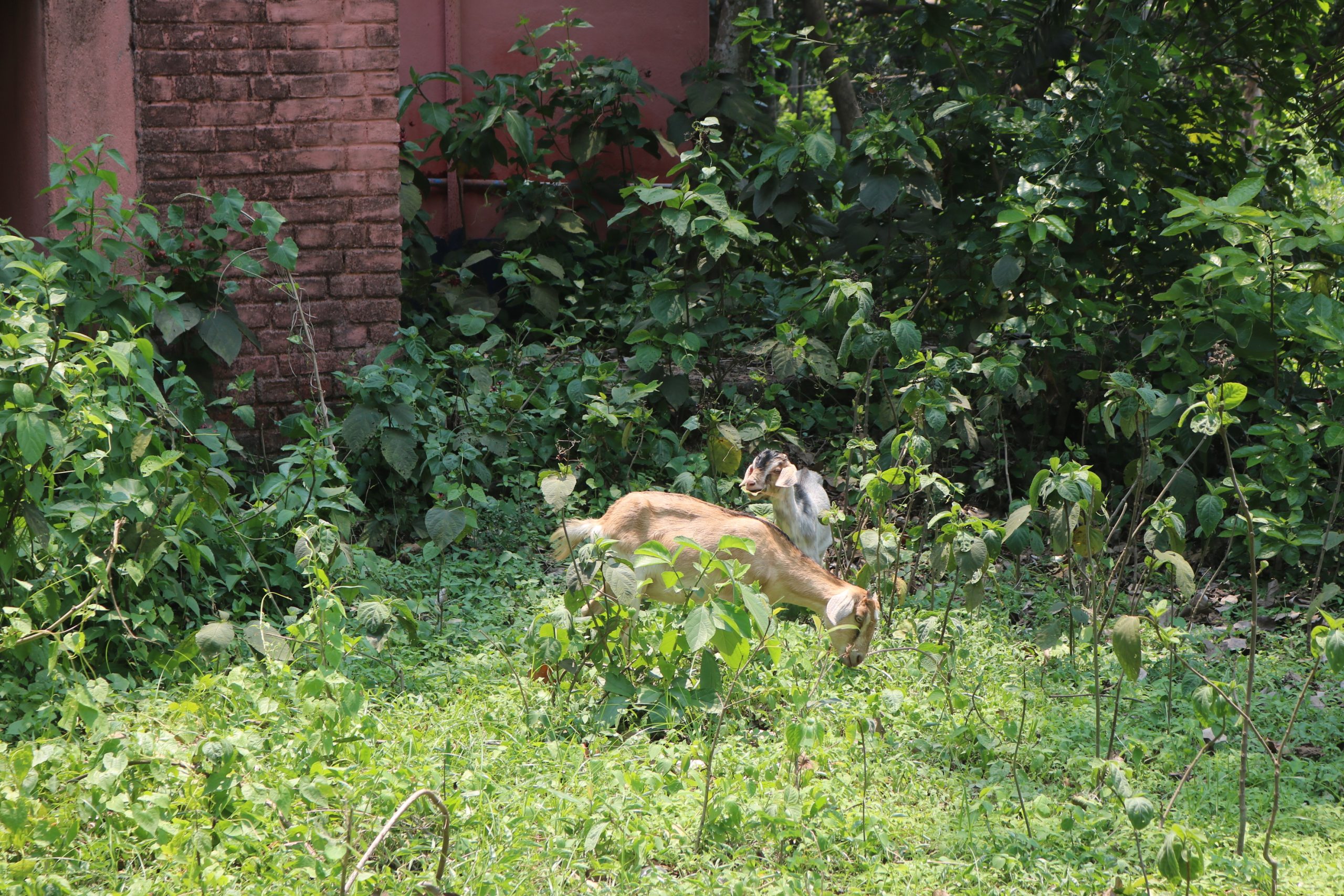
West Bengal, India – Across the villages of Birbhum district in West Bengal, India, goat rearing has long been a supplementary livelihood, enough to help households reduce vulnerability, but not sufficient to bring significant economic stability. In most households, goat rearing is managed by women while their husbands pursue other work. This arrangement allows women to run and grow their livestock business alongside domestic responsibilities.
That began to change with the IMSE grant initiative.
In March 2024, the Institute for Motivating Self Employment (IMSE) launched a goat farming program aimed at improving the livelihoods of rural women farmers. Supported by a USD 50,000 grant from the APFP-FO4A program, the initiative aimed at enhancing income opportunities for women engaged in goat rearing in Moldanga village, West Bengal.
The Asia-Pacific Farmers’ Program (APFP) – Farmers’ Organizations for Asia (FO4A) is implemented by the Asian Farmers’ Association for Sustainable Rural Development (AFA) and La Via Campesina (LVC), with funding from the European Union (EU) and the International Fund for Agricultural Development (IFAD). The program aims to strengthen the capacities of farmers’ organizations to provide economic services, advocate for enabling policies, and promote sustainable livelihoods for small-scale family farmers across Asia. APFP-FO4A is implemented in India by IMSE.
IMSE’s goal was not only to continue the practice of rearing goats for supplementary income but to transform it into a sustainable and profitable enterprise. The goat farming program operates on a revolving fund model, offering loans to farmers at minimal interest rates. Alongside financial support, IMSE strengthened market linkages and provided technical assistance on goat rearing. Farmers also participated in learning visits to other successful groups, exchanging knowledge and best practices.
Before the IMSE program, women typically kept only one or two goats, supplementing their income with stitching, embroidery, or other work. With the grant, each farmer was able to buy five to six goats, and within a year, many had doubled their stock to ten. Some of the goats were sold to repay the loan, while the remaining goats continued breeding or helped expand the herd. Through this initiative, more than 70 farmers were able to purchase goats and expand their goat businesses.
The initiative has significantly improved livelihoods. Farmers now have greater food security, can manage household expenses, send their children to school, meet basic health care needs, and some even manage to save for important family milestones, such as their children’s marriages.
The program has also created a ripple effect. When one woman successfully scaled up her goat business, others were inspired to apply for IMSE grants. Beyond livestock production, the program has raised awareness about livelihood opportunities, government schemes, and the importance of education.
Discover more from APFP / FO4A / ARISE
Subscribe to get the latest posts sent to your email.
Comments are closed