Background
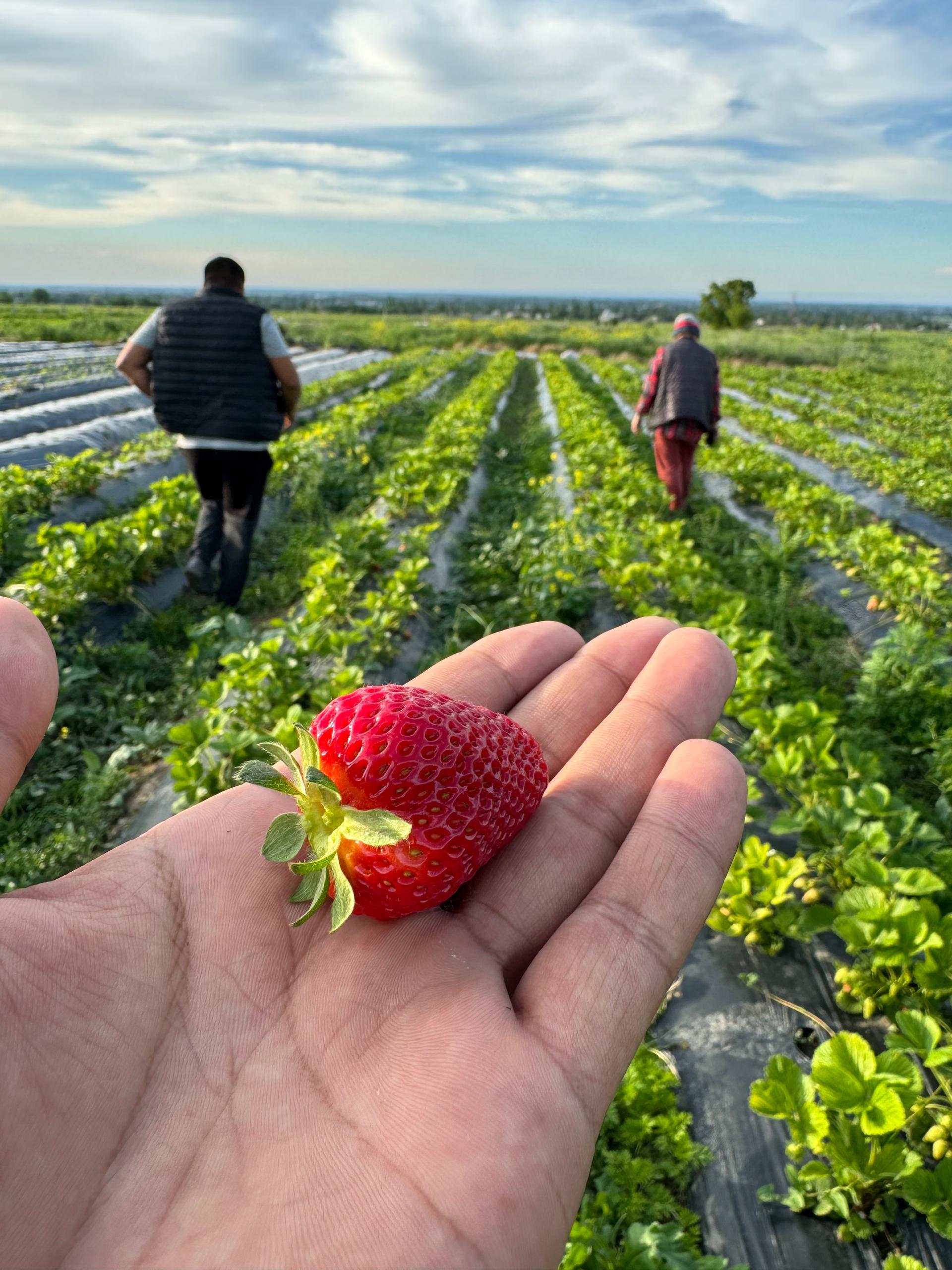
KAFLU LLC is a farmer-led agricultural enterprise operating in the Kyrgyz Republic, focused on the production of strawberries and raspberries. Prior to the APFP-FO4A intervention, farmers faced limited access to quality planting material, irrigation infrastructure, and working capital. Berry production was fragmented, seasonal risks were high, and income opportunities were constrained by weak production planning and limited market channels.
The lack of modern irrigation systems, water storage facilities, and mulching materials exposed farmers to climate variability, especially frost and drought risks. In addition, insufficient experience in organizing plantation-scale production limited the potential for sustainable income generation and job creation.
Through APFP-FO4A support, KAFLU LLC aimed to establish a structured berry production model that would strengthen economic services to farmers, improve access to planting materials, create employment, and build a scalable and climate-resilient enterprise.
The Asia-Pacific Farmers’ Program (APFP) – Farmers’ Organizations for Asia (FO4A) is implemented by the Asian Farmers’ Association for Sustainable Rural Development (AFA) and La Via Campesina (LVC), with funding from the European Union (EU) and the International Fund for Agricultural Development (IFAD). The program aims to strengthen the capacities of farmers’ organizations to provide economic services, advocate for enabling policies, and promote sustainable livelihoods for small-scale family farmers across Asia. The program is implemented in the Kyrgyz Republic by the National Union of Water Users’ Associations of the Kyrgyz Republic (NUWUA) and the Kyrgyz Association of Forest and Land Users (KAFLU).
Innovations/Good Practices
With support from APFP-FO4A, KAFLU LLC implemented several important innovations and good practices:
- Establishment of a one-hectare berry plantation: The project supported the purchase and planting of high-quality strawberry and raspberry seedlings, creating a consolidated production base rather than scattered individual plots.
- Investment in climate-resilient infrastructure: A water reservoir, water pumps, and a drip irrigation system were installed, significantly improving water efficiency and reducing climate-related production risks.
- Use of mulching materials (agrospan): Mulching helped protect plants from temperature fluctuations, retain soil moisture, and improve plant survival rates.
- Seedling preparation for farmer access: Seedlings were prepared in advance for sale to farmers, improving availability and affordability of planting material for future production cycles.
- Employment generation: Seasonal workers were hired for planting, maintenance, and harvesting, providing temporary employment opportunities in rural areas.
These practices introduced a more professional, planned, and climate-aware approach to berry production.
Impact
The implementation of the business plan resulted in clear economic and social impacts:
- Increased production and sales: KAFLU LLC successfully produced and sold strawberries and raspberries, as well as planting material, confirming stable local market demand.
- Improved farmer income: Sales of berries and seedlings generated income for participating farmers and demonstrated the commercial viability of organized berry production.
- Job creation: Seasonal employment was provided during planting, maintenance, and harvesting periods, contributing to rural livelihoods.
- Strengthened production capacity: The enterprise now operates a functioning irrigation system and plantation, forming a solid base for scaling up production in subsequent seasons.
- Enhanced resilience to climate risks: Infrastructure investments reduced vulnerability to drought and temperature stress, increasing production stability.
While the first production cycle faced challenges, the project successfully laid the foundation for a sustainable and replicable berry value-chain model.


Facilitating Factors
Facilitating factors included:
- APFP-FO4A financial support enabling access to critical infrastructure;
- Availability of local markets for fresh berries;
- Strong engagement of farmers and seasonal workers;
- Technical guidance from the national implementing agency.
Challenges
Key challenges encountered:
- Late planting in the initial season, which reduced yields and caused part of the harvest to coincide with early frosts;
- Dependence on a limited number of buyers, increasing market risk;
- The need for regular maintenance of irrigation equipment.
These challenges provided important learning opportunities and informed adjustments for future production cycles.
Lessons Learned
KAFLU LLC’s experience generated several key lessons:
- Timely planting is critical: Adhering to optimal agricultural calendars (April–May) is essential to avoid yield losses.
- Climate protection measures are indispensable: Mulching and irrigation significantly improve plant survival and productivity.
- Advance planning reduces risk: Early procurement of materials and early site preparation are crucial for success.
- Market diversification is needed: Expanding buyer networks will reduce dependence on a small number of clients.
- Seasonal labor requires planning: Early budgeting and worker organization improve operational efficiency.
Recommendations
Based on KAFLU LLC’s experience, the following recommendations are proposed:
- Support farmer organizations with early-stage infrastructure investments for climate-resilient production.
- Strengthen technical assistance on crop calendars and climate adaptation.
- Encourage market diversification strategies for fresh and processed berries.
- Promote replication of organized berry production models among other farmer organizations.
- Integrate risk-management planning into agricultural business plans.
Related documentation
Discover more from APFP / FO4A / ARISE
Subscribe to get the latest posts sent to your email.
Comments are closed