Background
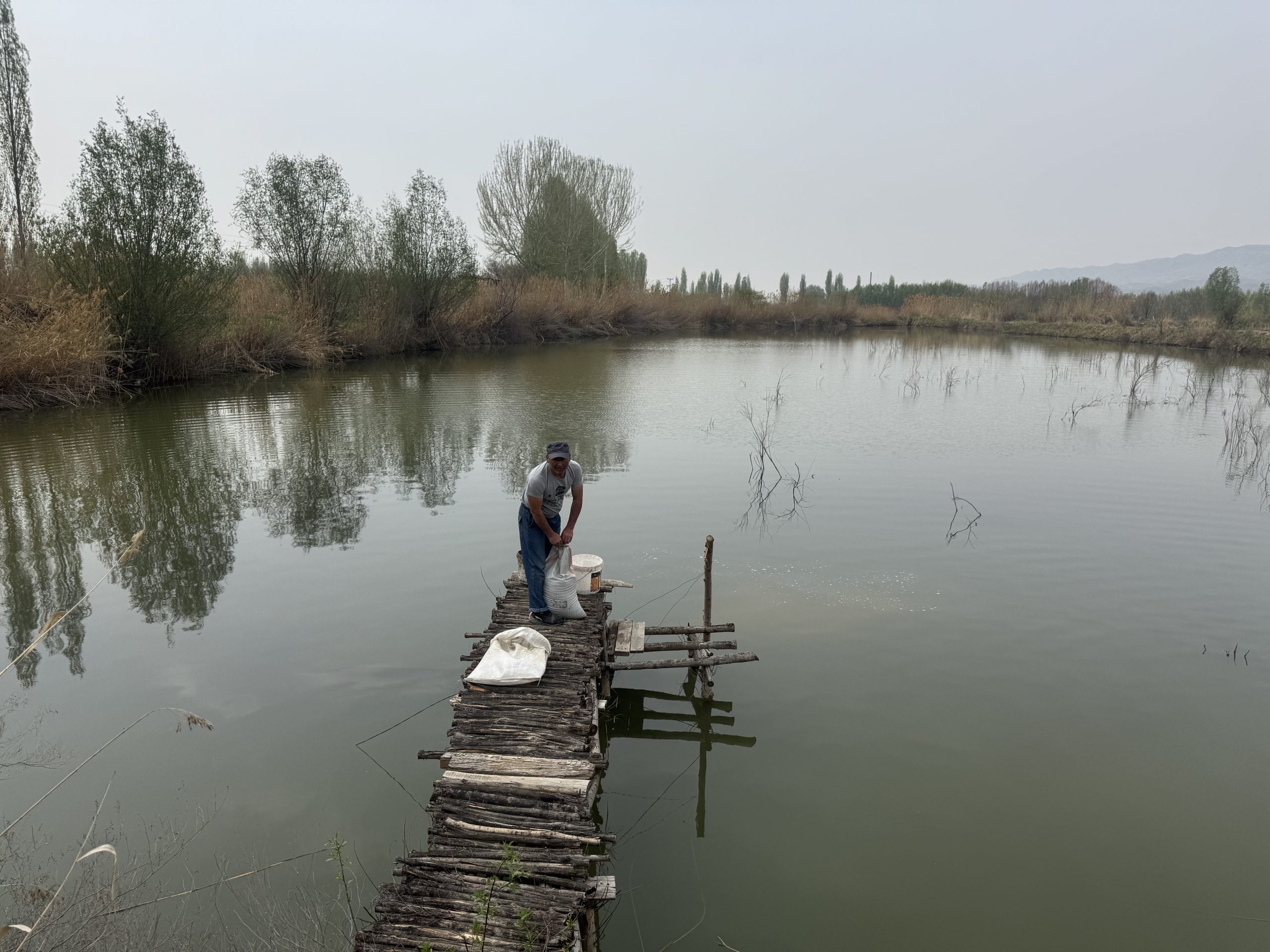
IRADAN LTD is a small-scale aquaculture enterprise operating in the Kyrgyz Republic, focused on freshwater fish farming. Prior to APFP-FO4A support, the organization faced major constraints in expanding production, including limited access to quality fish fry, insufficient feed storage infrastructure, and a lack of stable market linkages. Fish farming activities were largely seasonal and vulnerable to delays caused by pond preparation, feed procurement, and logistical challenges.
The enterprise also lacked experience in structured business planning and market-oriented production. While natural pond resources were available, inefficiencies in preparation, storage, and supply coordination limited production volumes and delayed market entry. These challenges constrained income opportunities for cooperative members and reduced the reliability of fish supply to local buyers.
Through APFP-FO4A support, IRADAN LTD aimed to strengthen its aquaculture value chain by improving production planning, investing in essential infrastructure, and establishing stable market relationships.
The Asia-Pacific Farmers’ Program (APFP) – Farmers’ Organizations for Asia (FO4A) is implemented by the Asian Farmers’ Association for Sustainable Rural Development (AFA) and La Via Campesina (LVC), with funding from the European Union (EU) and the International Fund for Agricultural Development (IFAD). The program aims to strengthen the capacities of farmers’ organizations to provide economic services, advocate for enabling policies, and promote sustainable livelihoods for small-scale family farmers across Asia. The program is implemented in the Kyrgyz Republic by the National Union of Water Users’ Associations of the Kyrgyz Republic (NUWUA) and the Kyrgyz Association of Forest and Land Users (KAFLU).
Innovations/Good Practices
With support from APFP-FO4A, IRADAN LTD introduced several important innovations and good practices in small-scale aquaculture:
- Investment in production inputs: The project supported the purchase of high-quality fish fry and feed, enabling the enterprise to expand stocking volumes and stabilize production cycles.
- Feed storage infrastructure: A 40-ton storage container was procured, significantly improving feed storage conditions, reducing spoilage, and allowing bulk procurement at more favorable times.
- Improved production planning: Pond preparation, fry stocking, and feeding schedules were systematized, improving survival rates and overall productivity.
- Cross-border sourcing of fry: Fish fry were sourced from reliable suppliers in neighboring countries, ensuring quality and timely delivery.
- Market linkage development: IRADAN LTD successfully negotiated and signed a supply contract with a local buyer, transitioning from ad hoc sales to structured market engagement.
These practices introduced a more professional, predictable, and market-driven approach to rural fish farming.
Impact
The implementation of the business plan resulted in clear and measurable outcomes:
- Increased production: IRADAN LTD produced approximately 15 tons of market-ready fish, demonstrating the productive capacity of the ponds and the effectiveness of improved management practices.
- Successful market entry: The enterprise signed a supply contract with the Balykchy Café and delivered 500 kg of fish in October and 1,000 kg in November, generating real revenue and confirming market demand.
- Income generation: Initial sales provided tangible income for participating members and validated fish farming as a viable rural enterprise.
- Improved operational efficiency: Investments in feed storage and planning reduced production delays and losses, strengthening the enterprise’s financial sustainability.
- Institutional learning: Members gained hands-on experience in business planning, logistics, and contract-based sales.
These results marked IRADAN LTD’s transition from experimental aquaculture to a functioning commercial operation.


Facilitating Factors
Facilitating factors included:
- APFP-FO4A financial support enabling strategic investments;
- Availability of natural pond resources suitable for fish farming;
- Strong engagement of cooperative members in pond preparation and feeding;
- Local market demand for fresh fish.
Challenges
Key challenges encountered during implementation:
- High sensitivity of production to seasonality and water temperature;
- Time-consuming pond cleaning and preparation processes;
- Dependence on external suppliers for fish fry and feed;
- Limited internal management experience during early stages.
These challenges highlighted the need for flexibility in planning and stronger internal management systems.
Lessons Learned
IRADAN LTD’s experience generated several important lessons:
- Seasonality must be built into business planning: Fish farming requires realistic timelines and buffer periods.
- Infrastructure matters: Proper feed storage significantly improves efficiency and reduces costs.
- Reliable suppliers are essential: Quality fry and timely delivery directly affect survival rates and output.
- Market contracts build stability: Even small supply agreements provide confidence and income predictability.
- Management skills drive sustainability: Planning, monitoring, and adjustment are as important as production itself.
Recommendations
Based on IRADAN LTD’s experience, the following recommendations are proposed:
- Promote replication of small-scale aquaculture models in regions with suitable natural resources.
- Support aquaculture enterprises with basic infrastructure investments (storage, water management, monitoring tools).
- Strengthen training on production planning and seasonal risk management.
- Facilitate market linkages with local buyers to stabilize demand.
- Encourage gradual scaling rather than rapid expansion to manage risks.
Related documentation:
Discover more from APFP / FO4A / ARISE
Subscribe to get the latest posts sent to your email.
Comments are closed