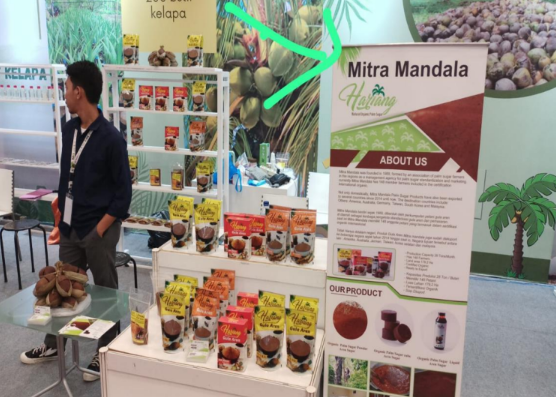
The palm tree, locally called aren, (Arenga sp.) is a sugar-producing plant known as aren sugar or Arenga Palm Sugar. The name of arenga comes from the species name of Arenga sp., which distinguishes it from other tree species that produce sugar, such as coconut sugar and others. Aren sugar has an advantage as a sugar with a glycemic index 50% lower than white sugar (crystal sugar cane), making it a highly sought-after sugar commodity in line with the trend of healthy lifestyles and its use by the food and beverage industry. How do palm (aren) farmers maintain their livelihood while preserving the environment where the aren trees grow in Hariang Village, Banten? This is the success story of the aren sugar-producing farmers together with Collective Business Group (KUB) Mitra Mandala.
Located in steep mountainous and hilly topography, Hariang Village in the remote area of Sobang District, Lebak Regency, Banten Province, Indonesia has long been one of the areas with many palm (aren) trees and a source of livelihood for hundreds of farmers who cultivate aren plants. Farmers who are members of the Collective Business Group (KUB) Mitra Mandala, led by Anwar, began producing aren sugar in 1989. The group then transformed aren sugar from its traditional items into crystal powder with a longer shelf life (more than 1 year), commonly known as crystal palm sugar.
Currently, KUB Mitra Mandala has become a learning hub for aren farmers in terms of: 1) implementing organic farming systems, 2) standardized production quality with minimal risk, and 3) collective marketing that reaches urban areas in Banten province and throughout Indonesia. With an installed production capacity of 22 tons/month, KUB Mitra Mandala can only absorb production with an average capacity of 7 tons per month, collected from 147 member farmers from 3 villages in the Hariang village, with a total land area of 179.2 hectares, of which 80.4 hectares have been certified organic.
KUB Mitra Mandala has been a member of Wahana Masyarakat Tani Indonesia (WAMTI) since 2019. WAMTI is one of the national farmers’ organizations implementing the APFP-FO4A program in Indonesia.
Hariang Village, one of the centers for organic aren development in Banten Province
Around 80.4 hectares of the total 295 hectares of aren plantations owned by KUB Mitra Mandala members in Hariang Village have been certified organic. This area has become one of the centers for organic-based aren development in Lebak district, Banten province. Certification is carried out as an implementation of an organic farming system without the use of pesticides or chemical fertilizers, aiming to preserve soil, water, and mountain forest ecosystems, as well as produce high-quality, environmentally friendly aren sugar. The application of organic farming has supported biodiversity conservation, reduced the risk of environmental degradation, and increased the added value of aren sugar and the competitiveness of cooperative products in the premium market, both locally and nationally. Therefore, in addition to the 80.4 hectares that have been certified, KUB Mitra Mandala is also working to develop the remaining land towards certification, so that all land and production can be guaranteed as organic aren sugar and have a high selling value.
| How many liters of palm sap does one aren tree produce? How many liters of palm sap are needed to produce one kilogram of aren sugar? One aren tree can produce around 8-20 liters of palm sap per day (generally, the average field production is around 10-15 liters of palm sap per tree per day, depending on the variety and environmental conditions) To produce 1 kg of aren sugar, an average of 5-8 liters of palm sap is needed, but the most commonly used reference in Indonesia is around 6-7 liters of palm sap per 1 kg of aren sugar. The yield of aren sugar from palm sap is around 13-20%, so the higher the sugar content in the palm sap, the less volume of palm sap is required. In Hariang village, Sobang district, Lebak regency, based on an interview with Mr. Anwar, Chairman of KUB Mitra Mandala, it takes an average of 10 liters of palm sap to produce 1 kg of aren sugar. Therefore, 1 aren tree produces 8-20 liters of palm sap per day, and it takes around 8-10 liters of palm sap to produce 1 kg of aren sugar. |
In 2023, KUB Mitra Mandala, together with WAMTI, took advantage of opportunities to increase production and marketing through the APFP-FO4A Challenge Fund program. In line with market development and production improvement efforts, this program is expected to increase the income of aren farmers in Hariang Village, maintain the sustainability of the Mitra Mandala Collective Business Group (KUB), and facilitate WAMTI’s role in providing economic services to its members.
The Asia-Pacific Farmers’ Program (APFP) – Farmers’ Organizations for Asia (FO4A) is implemented by the Asian Farmers’ Association for Sustainable Rural Development (AFA) and La Via Campesina (LVC), with funding from the European Union (EU) and the International Fund for Agricultural Development (IFAD). The program aims to strengthen the capacities of farmers’ organizations to provide economic services, advocate for enabling policies, and promote sustainable livelihoods for small-scale family farmers across Asia.
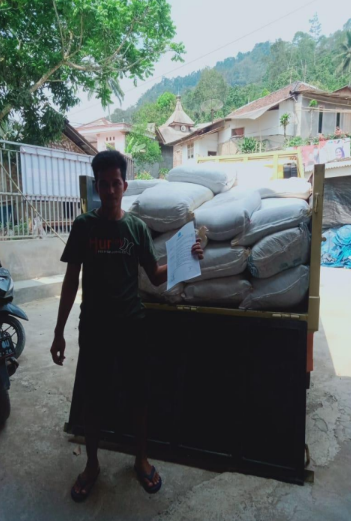
Along with the growing market for Hariang aren sugar, and in order to expand domestic and export market opportunities, the Production and Marketing Development Support Program for Aren Sugar in Hariang village has involved 164 aren farmer households. Members of the farmer households have benefited from this program, including farmers who tap aren trees, female farmers who process aren into batok sugar, and young people involved in tapping and/or processing aren into sugar, as well as KUB Mitra Mandala staff and workers involved in the production. From the process of pounding batok sugar sent by farmers, cooking sugar into liquid form, drying cooked sugar, drying crystal aren sugar in the oven, filtering crystal sugar to the finest texture (quality consistency), storing the crystal sugar stock in plastic bags, weighing, to packaging, everyone involved has received benefits from this program.
Throughout 2023, the program has run well and contributed directly to increasing the income of aren farmer households, scaling up KUB Mitra Mandala’s business, providing employment opportunities for villagers, and contributing to the sustainability of farmers’ livelihoods, especially in Hariang Village. This can be seen from the purchase of aren sugar raw materials from farmers throughout 2023, which reached 85,142.2 kilograms with a value of IDR 1,949,489,000 (USD 115,299). This figure shows a 3.2-fold increase or 327% purchase of aren sugar from 147 farmers, amounting to 45,558.45 kilograms with a value of IDR 931,169,000 (USD 55,072) over 8 months in the 3/4 quarter period (January to August 2023) to 165 farmers, amounting to 50,866,000 kg with a value of Rp.885,488,982 in the 4 months of the 1/4 quarter period (September to December 2023). With the increase in marketing and purchasing from farmers by KUB Mitra Mandala, this directly increases income and participation at the household level of aren farmers involved.
In terms of sales of aren sugar products, a total of 68,429.7 kilograms was recorded throughout 2023. This amount increased 1.75 times (175%) from 36,528.7 kilograms in 8 months of the quarter (January to August 2023) to 31,901 kg in 4 months of the quarter (September to December 2023). In addition, there was an increase in the scale of KUB Mitra Mandala’s business from a micro business scale in 2022 (maximum assets of IDR 1 billion (USD 59,143) per year) to a small business scale at the end of 2023 (assets of IDR 1 billion to IDR 2 (USD 118,287) billion per year). There was also an increase in the income of direct beneficiaries circulating within the KUB Mitra Mandala environment, amounting to around IDR 2,420,859,925 (USD 143,178).
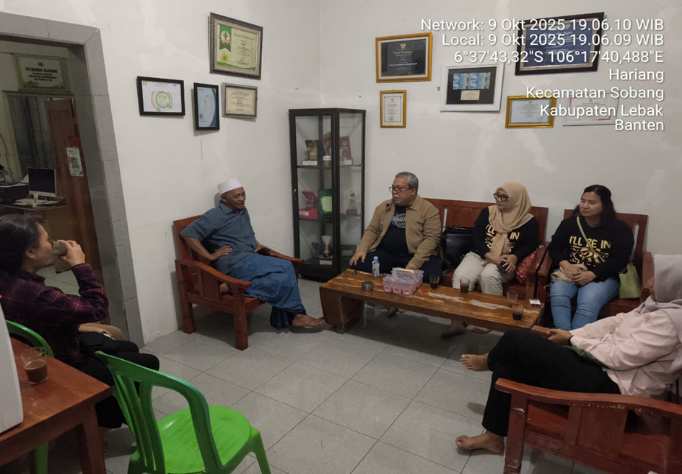
The production aspect and quality consistency of aren sugar at KUB Mitra Mandala are no longer in doubt, so market expansion/development is the key to success in maintaining the sustainability of the aren sugar business in Hariang Village. KUB Mitra Mandala has directly contributed to state revenue through taxes and contributed to the development of local aren commodities of the plantation sector.
KUB Mitra Mandala has also become a center for farmers to improve their knowledge and skills in terms of cultivating aren trees applying organic systems, as well as facilitating organic certification for its members. The application of organic farming by farmers, is to maintain the sustainability of aren plant resources naturally, while it also supports forest conservation and the sustainability of the livelihoods of hundreds of aren farmers, especially in Hariang Village.
| The aren plants are located in 295 hectares of customary forest area, state forest (Halimun Salak National Park), with plant diversity. What’s the ideal number of aren plants in that area? The ideal number of aren plants with plant diversity can be calculated based on the ideal planting distance for a mixed or agroforestry system. Recommendations from several sources show that the ideal planting distance for aren tree is between 7×7 meters (204 trees per hectare) to 8×8 meters (156 trees per hectare) for a monoculture system. However, in a plant diversity or agroforestry system, a lower density is usually used to make room for other plants, so it’s generally around 30 to 164 trees per hectare, depending on the planting pattern and intensity of other plant mixtures. Estimation of Aren Tree Population Using the maximum ideal density (204 trees per hectare): 295 hectares x 204 = 60,180 trees Using a moderate agroforestry pattern (around 50 trees per hectare): 295 hectares x 50 = 14,750 trees General range practiced in system diversity: 295 hectares x 30 = 8,850 trees to 295 hectares x 164 = 48,380 trees. Recommendation for the Hariang Village Customary Forest Area, Sobang District, Lebak Regency, Banten Province: For the forest area that prioritizes plant diversity, a density of around 30-70 aren trees per hectare can be considered ideal to maintain space for other plants and maintain ecosystem balance. Thus, the ideal number of aren trees in 295 hectares is between 8,850 and 20,650 trees. |
Challenges for KUB Mitra Mandala
In the midst of the success achieved by KUB Mitra Mandala, the group also faces several main challenges that must be overcome, as follows:
- Limited Working Capital. Limited capital is a major obstacle to absorb all the crystal sugar production from member farmers. Without sufficient capital, the cooperative can only purchase a portion of the harvest, resulting in much of the production potential not being optimally absorbed.
- Optimizing Production Capacity. The installed production capacity reaches 22 tons/month, but the average realization is only around 7 tons/month. This limited absorption of raw materials is related to the lack of capital and market access that still needs to be expanded.
- Standardization and Market Trust. Maintaining and updating organic certification requires high costs and continuous monitoring. Market trust in organic products can decline if it is not managed properly.
- Pest and disease
- Monkey eats aren fruit. Whereas if the aren seeds fall to the ground, these seeds can grow wild and regenerate old trees, farmers can harvest it in the future.
- The wawung (weevil) pest damages the trunk and fruit of the aren tree, reducing yields. Therefore, farmers need proper control measures so that the weevil pest population does not increase.
- Pigs often damage the planting area and tear young plants, causing physical damage to the crops and yield losses for farmers.
- Civets can also damage the fruit or aren plants, although the damage is relatively less significant compared to monkeys or pigs.
Changes experienced by KUB Mitra Mandala from the APFP-FO4A Program
Through activities under the APFP-FO4A program, KUB Mitra Mandala learned about the quality of palm sap (in local: nira), the Hariang village customary forest, and aren trees in Halimun Salak National Park. KUB Mitra Mandiri gained this knowledge when exporting the crystal sugar to Malaysia and South Korea. Buyers from these two countries complained that the liquid of crystal sugar they received had undergone oxidation or fermentation, causing it to melt and resulting in losses for the buyers. From this incident, KUB Mitra Mandala learned and applied the lessons to manage the crystal sugar. They established a team to conduct ongoing research to monitor the quality of crystal sugar purchased from members (product traceability).
Some recommendations from research institutions and practitioners can be summarized as follows:
- The quality of aren sugar processing determines the quality of the resulting aren sugar. The best palm sap (nira) is fresh palm sap from male flower bunches with a neutral to slightly alkaline acidity level (pH 6-7), clear color, no sour or fermented smell, and high total sugar content (13-15%).
- The palm sap should have a pH of around 6-7. If the pH drops <6, fermentation occurs, it can reduce the quality and yield of sugar.
- Total sugar content (Brix) should be at least 11-15%. The higher the Brix value, the better for sugar yield and quality.
- The chemical composition of fresh palm sap mainly contains carbohydrates in the form of sucrose, glucose, and fructose, as well as protein (0.2-0.4%), fat (<0.02%), and low minerals (calcium, phosphorus, and vitamin C).
- Container cleanliness is crucial. Storing palm sap in a clean container aims to prevent microbial contamination that accelerates fermentation and reduces quality.
- The palm sap should be processed within 2.5 hours after harvest to maintain quality and prevent fermentation.
| Lesson learned a. The best palm sap for aren sugar production is fresh palm sap, pH 6-7, Brix at least 11-15%, clear, no sour smell, and processed immediately after harvest. b. Optimum palm sap quality for the best aren sugar production has specific physical and chemical characteristics, namely fresh palm sap that is clear, not sour (pH close to neutral 6-7), and has high sugar content (Brix at least 12-15%). c. Low-quality or fermented palm sap tends to have a pH below 6, a sour smell, a cloudier color, and lower sugar content, resulting in lower sugar yield. |
The important role of women and youth
Important changes related to the role of women and young farmers are an ongoing process. Women are increasingly recognized and empowered in the aren sugar production process. However, no women’s aren sugar farmer groups have been established to increase their access to training, technology, capital, and rights in the production value chain.
The active role of women in aren sugar value chain entrepreneurship occurs throughout the chain, from production and processing to marketing. Women have more stable income and play a crucial role in decision-making, both at home and in the community. Diversification of income and product innovation is also experienced by women, such as additional income from further processing (processing crystal sugar into granulated sugar, liquid sugar, and local processed products), and women build side businesses besides directly farming aren/palm, directly affecting welfare. The smooth operation of women farmers is greatly influenced by family and community support, especially in sharing roles in the household and agriculture.
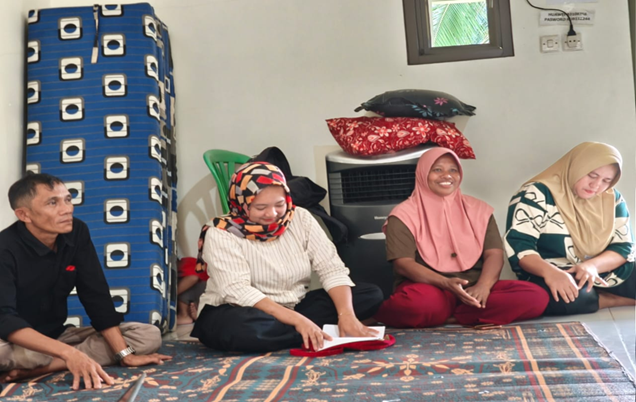
Meanwhile, young people are an important target in the regeneration of aren sugar tappers and producers. To ensure the sustainability of the aren sugar business, assistance, modern technology training, and product innovation development are provided to attract young people to be involved not only as workers but also as entrepreneurs and drivers of modernization of the aren sugar industry. Assistance with modern equipment and business education are crucial to make the production process effective and attractive to young people.
KUB Mitra Mandala encourages young farmers to pursue education and stay in the village to develop aren plants and their processed products. In terms of socio-economic conditions in Sobang district, Lebak regency, the age of aren farmers is now under 40 years old, and there are no aren farmers over 40 years old, as the youth have pursued education at KUB Mitra Mandala. Currently, the active farmers in this field are local youth.
The role of women and youth in the aren sugar industry is now increasingly inclusive, active, and strategic. Success is determined by collaboration among all parties, skills, access to resources, product innovation, and strong institutions. Fair approaches and technologies will be a distinguishing factor in the future.